Reviewed and updated: October 23, 2026
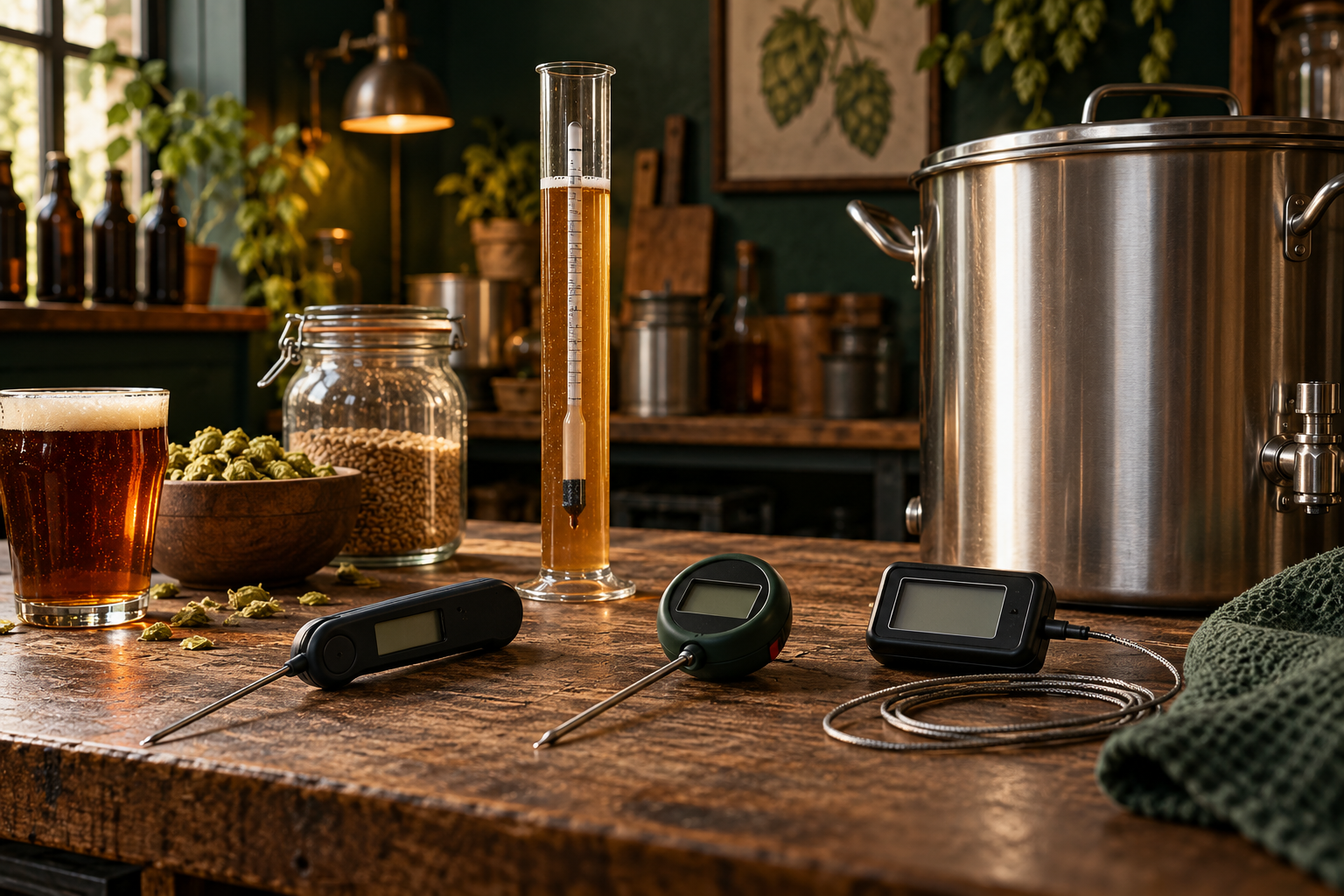
A brewing thermometer should match the task: quick spot checks, continuous mash monitoring, or verification work. Probe shape, response, cleaning, and usable range matter more than a crowded feature list.
Choose the measurement job first
An instant-read thermometer is useful for checking several points in a mash or cooling wort, while a leave-in probe can monitor one location over time. Infrared tools read surface temperature and cannot replace an immersion probe for liquid. Decide which measurement changes a brewing decision before comparing displays or app features. Make the decision from the real routine rather than a feature list. Check the current instructions, practice the step in a controlled setting, and change one variable at a time. That approach makes results easier to judge and helps prevent an attractive shortcut from becoming a repeated mistake.
Consider Thermapen ONE for fast checks
ThermoWorks describes Thermapen ONE as a folding instant-read instrument with a one-second response specification, a rotating backlit display, motion sensing, and an IP67 case. Its thin tip can check multiple locations quickly. It is a premium choice for brewers who also want a versatile kitchen thermometer. A useful comparison separates what can be verified from what is merely advertised. Record the model, material, setting, or method you actually used, then review the result before repeating it. Small notes are more dependable than memory when conditions change from one session to the next.
Consider ThermoPop 2 for value
ThermoPop 2 uses a fixed probe, rotating display, and a simpler button layout. It suits brewers who want quick handheld checks without paying for the fastest model. Compare the current probe length with the vessel depth and keep hands away from steam. A short probe can be awkward around a deep kettle. Keep the process simple enough to repeat. Prepare the workspace first, follow the relevant maker or safety directions, and stop when something looks, smells, sounds, or feels wrong. A careful routine usually produces a better result than adding more steps without a clear purpose.
Use a probe system for continuous monitoring
A cable probe and display can stay positioned during a mash, but the cable, probe junction, and mounting method must match the manufacturer’s temperature and moisture limits. Keep the display away from steam and spills. Do not close a hard lid on a cable unless the system is designed for that pressure point. Make the decision from the real routine rather than a feature list. Check the current instructions, practice the step in a controlled setting, and change one variable at a time. That approach makes results easier to judge and helps prevent an attractive shortcut from becoming a repeated mistake.
Check accuracy responsibly
Use the calibration or verification procedure supplied by the maker. Ice-point and boiling checks require careful technique, clean water, correct immersion depth, and adjustment for local boiling conditions. A reading that looks plausible is not proof of accuracy. Record results and replace a damaged or drifting instrument. A useful comparison separates what can be verified from what is merely advertised. Record the model, material, setting, or method you actually used, then review the result before repeating it. Small notes are more dependable than memory when conditions change from one session to the next.
Match the probe to the vessel
A narrow fast-response tip excels at spot checks, while a longer probe may keep hands farther from steam. Confirm minimum immersion depth and sensor location. Do not rest a plastic housing against a hot kettle rim or use the probe to stir thick mash. Bending can damage a hollow sensor shaft. Keep the process simple enough to repeat. Prepare the workspace first, follow the relevant maker or safety directions, and stop when something looks, smells, sounds, or feels wrong. A careful routine usually produces a better result than adding more steps without a clear purpose.
Clean without damaging electronics
Wash only the approved probe area with appropriate detergent, then dry it. Waterproof ratings have specific limits and do not make every hinge, connector, or cable suitable for soaking. Avoid carrying sticky wort into the folding hub or display. Sanitize according to the brewing stage and product instructions. Make the decision from the real routine rather than a feature list. Check the current instructions, practice the step in a controlled setting, and change one variable at a time. That approach makes results easier to judge and helps prevent an attractive shortcut from becoming a repeated mistake.
Build a repeatable temperature routine
Measure in consistent locations, stir when the process calls for it, allow the reading to stabilize, and write it down. Compare the same thermometer rather than switching tools mid-batch. Temperature gradients are normal in large vessels, so one number should be interpreted with location and timing. A useful comparison separates what can be verified from what is merely advertised. Record the model, material, setting, or method you actually used, then review the result before repeating it. Small notes are more dependable than memory when conditions change from one session to the next.
Choose by workflow and budget
Thermapen ONE is the speed-focused option; ThermoPop 2 is a simpler handheld value; a compatible leave-in probe system fits continuous monitoring. Verify the official specification and current model, then use the paid Amazon searches below. Amazon price and availability are intentionally not stated. Keep the process simple enough to repeat. Prepare the workspace first, follow the relevant maker or safety directions, and stop when something looks, smells, sounds, or feels wrong. A careful routine usually produces a better result than adding more steps without a clear purpose.
Quick checklist
- Choose instant-read or continuous monitoring.
- Confirm range and immersion depth.
- Protect displays and cables from steam.
- Verify accuracy with maker instructions.
- Clean only approved areas.
- Record temperature, location, and time.
Why these checkpoints matter
- Choose instant-read or continuous monitoring. This defines the starting condition and prevents the rest of the process from resting on an assumption.
- Confirm range and immersion depth. This narrows the choice to evidence you can verify on the exact label, model, or scene.
- Protect displays and cables from steam. This checkpoint reduces avoidable risk before another variable is introduced.
- Verify accuracy with maker instructions. This keeps the routine compatible with the person, product, material, or equipment involved.
- Clean only approved areas. This creates a repeatable step instead of relying on memory or marketing language.
- Record temperature, location, and time. This final review catches changes in condition, availability, or instructions before the next use.
Common questions
Is an infrared thermometer enough for brewing?
No. It reads a surface and cannot replace an appropriate immersion probe for liquid temperature.
Can I leave an instant-read thermometer in the mash?
Only if the maker explicitly designs it for continuous leave-in use.
How many places should I check?
Check enough locations to understand gradients, using the same method and safe handling each time.
Official product references
- Thermapen ONE official product information
- Thermapen ONE operating instructions
- ThermoPop 2 operating instructions
Compare current Amazon listings
Thermapen ONE
Confirm the exact product, model or size, package contents, seller, current price, and availability.
Thermapen ONE
View Thermapen ONE on Amazon (paid link)
ThermoPop 2
Confirm the exact product, model or size, package contents, seller, current price, and availability.
ThermoPop 2
View ThermoPop 2 on Amazon (paid link)
homebrew leave-in probe thermometers
Confirm the exact product, model or size, package contents, seller, current price, and availability.
homebrew leave-in probe thermometers
View homebrew leave-in probe thermometers on Amazon (paid link)
2 thoughts on “Best Digital Thermometers for Homebrewing”