Reviewed and updated: November 10, 2026
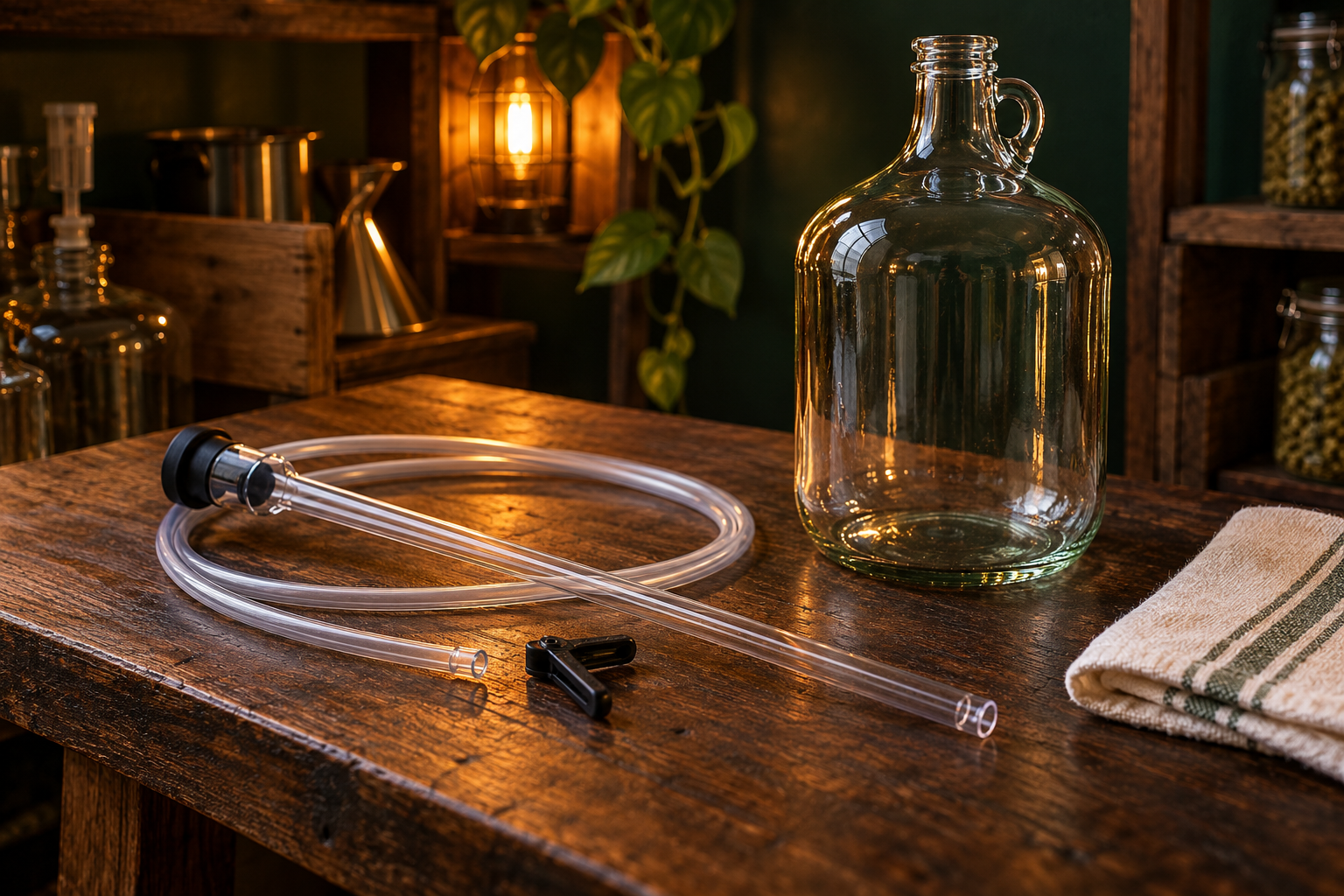
If a full-size siphon feels clumsy in your small fermenter, the Fermtech Auto-Siphon Mini kit is worth a look. We’d consider it when you want a more manageable way to transfer a small batch without wrestling with a tool made for a taller vessel. The attraction is a better fit for the beer you actually brew.
The kit covered here is Fermtech’s Mini with six feet of tubing and a clamp. Those extras are useful only if they suit your setup, so check the vessel opening, reach, and transfer route before ordering. A compact siphon can make the job easier, but it won’t fix a wobbly receiving bucket or a hose stretched across the room.
The bundle is especially worth comparing when you’re putting a small transfer setup together from the start. If you already have suitable tubing and a clamp, compare what you need before buying the same pieces again.
Check the vessel opening, reach, and connection before buying.
Fermtech Auto-Siphon Mini with 6 Feet of Tubing and Clamp
A compact siphon kit with six feet of tubing and a clamp for a small-vessel setup.
Find in Amazon (paid link)
Start with the jug or bucket you use most
A small-batch label doesn’t tell you everything about fit. Think about the opening, the shoulder of a jug, and the depth the siphon needs to reach as the beer level falls. A tool that slips neatly into one container may be awkward in another holding a similar amount.
Measure your vessel in its normal working position. You should be able to put the siphon in, hold it comfortably, and remove it without tipping a heavy container. If a narrow neck or low shelf makes that difficult, work through the fit before adding the kit to your next order.
This matters especially if you move between several fermenters. Buy around the container where you need the improvement most, rather than assuming one small siphon will be equally handy everywhere. Keeping a larger tool for a larger vessel may still make sense.
Make sure you’re comparing the same kit
Fermtech identifies the six-foot tubing-and-clamp bundle as 5478-6H. The six-foot tubing-and-clamp bundle is a different purchase from a bare siphon or replacement parts. You don’t need to fill your brew notes with catalog codes, but this one helps distinguish the bundle you mean to buy.
Check the included-parts description rather than relying on a picture of everything arranged together. A seller’s bundle may be different from the kit you’re expecting. Recheck the title and contents after choosing an option, especially if the page groups several sizes together.
Give the tubing connection the same attention as the siphon. Use the specified fit and assembly directions when buying replacements. A hose that merely looks close in a photo can be loose or difficult to attach. You want a connection that works properly without forcing or overtightening it.
Picture the whole transfer, not just the start
Put the source and receiving vessels somewhere stable, with a sensible route between them. Leave room to watch the flow and stop the transfer. The hose shouldn’t kink, pull the siphon sideways, or turn the walkway into an obstacle course.
If you need more height, use a suitable stable surface rather than an improvised pile of boxes under a glass jug. The setup should feel comfortable before it’s full of beer. You’re more likely to enjoy bottling when you aren’t trying to steady a container with one hand while reaching for something else.
The receiving end deserves a place to stay, too. Think about how it will be held and whether you can reach both ends without straining. Our advice on reducing oxidation at bottling puts that handling into the wider job of getting finished beer into its next container.
If a friend is helping, agree who watches the receiving vessel and who handles the siphon before starting. It’s a simple way to avoid both reaching for the same part while nobody notices what’s happening at the other end.
Give it a water run before the beer is ready
A rehearsal with clean water is a good way to learn the starting motion, clamp position, and stopping point. Follow the manufacturer’s assembly and operating directions. You’ll have much more room to sort out an awkward hose when a spill is only water.
Watch what happens as the source level falls. Can you keep the pickup where it needs to be without tilting the vessel? Does the tubing pull the tool away from a comfortable position? Adjust the workstation until you can see the flow and handle the equipment easily.
Keep the practice area clear of electrical sockets and slippery walking routes, with children and pets away from the setup. The point isn’t to make a complicated ritual out of a small tool. It’s to get the unfamiliar part out of the way before you’ve got a finished batch waiting.
Easy cleaning is part of a good fit
Before buying, look at how the siphon comes apart and how its maker says to clean and sanitize it. Narrow passages and removable parts need attention, and you should be able to reach the relevant surfaces without forcing a brush or sharp object where it doesn’t belong.
Remove residue first, then sanitize with a process suitable for the materials and beer contact. Follow the cleaner and sanitizer directions for strength and contact time. A quick rinse or a tube that looks clear isn’t the same as equipment ready for the next transfer.
The tubing needs checking, too. Look for cloudy residue, cracks, awkward bends, and a connection that has loosened with use. Let it dry and store it where you can inspect it, rather than leaving it compressed in a damp heap. Replace a part you can’t clean properly with the correct compatible component.
Is the Mini the upgrade you need?
Think back to the last transfer that annoyed you. If the trouble was an oversized tool in a narrow jug, the Mini has an obvious job. If the problem was an unstable receiving vessel or no clear place for the hose, reorganizing the station may do more good than buying another siphon.
A few useful batch notes can help you remember which change actually made things easier. Record the vessel and arrangement that worked, along with anything you needed to adjust. Next time, you can start from something better than a vague memory of getting the siphon going eventually.
Once the kit arrives, check the delivered parts before scheduling the next bottling session around it. Keep the instructions with your equipment notes. A missing or mismatched piece is much easier to sort out before the beer is ready and all the bottles are waiting.
Our take
We’d buy the Fermtech Mini kit for a small vessel where a compact siphon, its tubing, and clamp make the transfer more comfortable. Match the kit to the jug, give the setup a water rehearsal, and make sure cleanup is straightforward. If your existing siphon already fits and behaves well, keep it. The worthwhile upgrade is an easier transfer, not simply a smaller tool.