Reviewed and updated: October 21, 2026
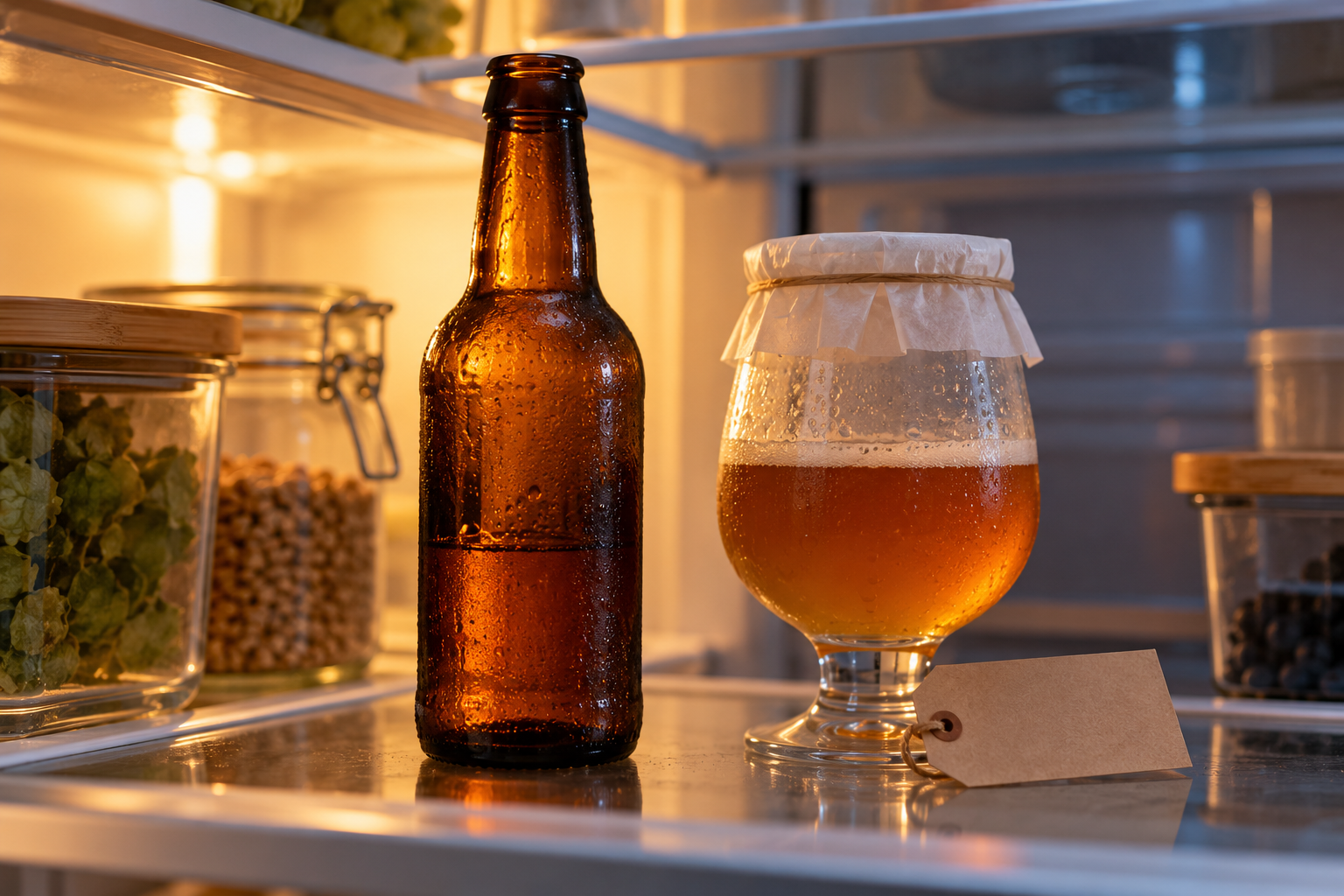
Once a beer is opened, carbonation, aroma, oxygen, temperature, and sanitation start changing it. Short, cold, covered storage can slow the decline, but it cannot restore the original pour.
This guide was reviewed against current official product information where a model is discussed. Specifications and packages can change, so verify the exact label or manufacturer page before acting.
Decide whether saving it is worthwhile
A delicate lager, hop-forward beer, or highly carbonated style can lose its best character quickly after opening. A strong beer may remain interesting longer, but oxidation still changes it. Save an unfinished beer only when the container is clean, the drink has not been contaminated, and you expect to revisit it soon.
Move it to the refrigerator promptly
Cold temperatures generally slow staling and microbial activity. Cover the original bottle or can with a clean purpose-made closure and refrigerate it upright. Do not leave it warm on a counter for hours and then treat chilling as a reset. Avoid freezing, which can damage the container and change the beer.
Reduce air without risky transfers
Every pour and transfer adds oxygen and potential contamination. If the remaining beer can stay safely in its original container under a clean closure, that is usually simpler than moving it through funnels or improvised vessels. Do not pour it into a dirty growler, and never add fresh beer to an old unfinished portion.
Label the date and identity
Mark the container with the beer name and the time or date it was opened. This prevents a mystery bottle from lingering in the refrigerator. Keep it away from children and from containers that could be mistaken for water or juice. A clear label also helps compare how different styles change overnight.
Expect carbonation and aroma loss
A reclosed beer may pour flatter, show less foam, and release fewer fresh aromatics. Hop character can seem duller while papery or sweet oxidation notes become easier to notice. These quality changes do not automatically prove danger, but they are good reasons to pour a small sample and judge carefully.
Discard obvious problem beer
Discard beer with unexpected mold, ropey texture, package swelling, a damaged closure, or a strong odor that is clearly different from the beer style. Do not taste a beer to prove it is safe. When sanitation, storage time, temperature, or cross-contamination is uncertain, throwing it away is the sensible choice.
Do not use appearance alone
Cloudiness, sediment, tartness, or unusual aroma can be intentional in some beers. Compare the beer with the brewer description and what it was like when freshly opened. The useful question is whether there is an unexplained change plus a storage or sanitation concern, not whether the beer matches a generic idea of clarity.
Plan smaller pours next time
If opened beer is often left over, buy smaller package sizes, share responsibly, or pour a smaller glass and recap promptly. For tasting flights, open one beer at a time and keep sample sizes modest. The best storage method is avoiding a large warm remainder while still supporting responsible consumption.
Quick checklist
- Refrigerate and cover promptly.
- Keep the beer in a clean container.
- Label when it was opened.
- Expect aroma and carbonation loss.
- Discard unexplained contamination signs.
- Choose smaller pours next time.
Why these checkpoints matter
- Refrigerate and cover promptly. This defines the starting condition and prevents the rest of the process from resting on an assumption.
- Keep the beer in a clean container. This narrows the choice to evidence you can verify on the exact label, model, or scene.
- Label when it was opened. This checkpoint reduces avoidable risk before another variable is introduced.
- Expect aroma and carbonation loss. This keeps the routine compatible with the person, product, material, or equipment involved.
- Discard unexplained contamination signs. This creates a repeatable step instead of relying on memory or marketing language.
- Choose smaller pours next time. This final review catches changes in condition, availability, or instructions before the next use.
Common questions
How long does opened beer stay good?
There is no universal quality window. Style, closure, sanitation, oxygen, and temperature all matter; plan to revisit it soon.
Can I freeze leftover beer?
Freezing can expand the liquid, damage packaging, and alter texture. Refrigeration is the better short-term choice.
Is flat beer unsafe?
Loss of carbonation is mainly a quality change, but discard beer when storage or contamination is uncertain.
Keep the decision useful
Write down the exact model, label, starting condition, and result. Change one variable at a time and return to the official instructions when anything is unclear. A short record makes the next decision easier and keeps an isolated result from becoming a rule that does not fit a different product, person, material, or environment.
Review the information again before repeating the process. Stop when comfort, safety, condition, or the manufacturer’s instructions provide a reason to stop. A useful routine stays simple because every step answers a real question.
For the next attempt, note what improved, what remained uncertain, and what should stay unchanged. This final check reduces guesswork and helps small problems become visible before they turn into repeated mistakes.
Keep the original instructions, model information, and observations together. Before repeating the process, confirm that the product, setting, environment, and intended result are still the same.
Use the result as one observation rather than a promise. Conditions change, and the safest next step is the one supported by the current label, manual, evidence, and the limits you can verify.
Use the result as one observation rather than a promise. Conditions change, and the safest next step is the one supported by the current label, manual, evidence, and the limits you can verify.
Use the result as one observation rather than a promise. Conditions change, and the safest next step is the one supported by the current label, manual, evidence, and the limits you can verify.
Use the result as one observation rather than a promise. Conditions change, and the safest next step is the one supported by the current label, manual, evidence, and the limits you can verify.
Use the result as one observation rather than a promise. Conditions change, and the safest next step is the one supported by the current label, manual, evidence, and the limits you can verify.
Use the result as one observation rather than a promise. Conditions change, and the safest next step is the one supported by the current label, manual, evidence, and the limits you can verify.
Use the result as one observation rather than a promise. Conditions change, and the safest next step is the one supported by the current label, manual, evidence, and the limits you can verify.