Reviewed and updated: October 20, 2026
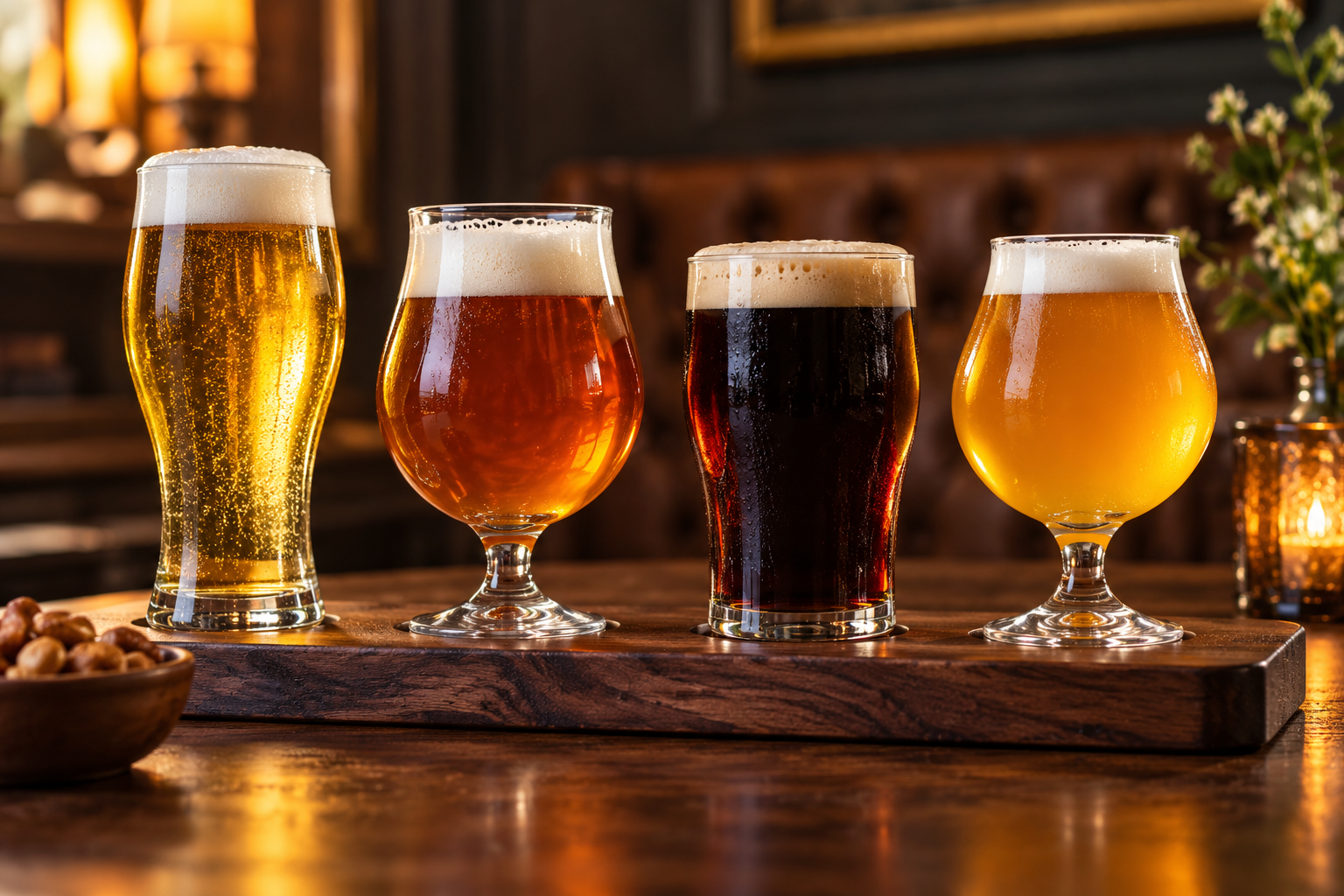
A useful tasting glass makes small pours easy to compare without forcing every beer into one dramatic shape. Capacity, rim, stem, stability, and cleaning matter more than collecting a cabinet full of novelty glassware.
This guide was reviewed against current official product information where a model is discussed. Specifications and packages can change, so verify the exact label or manufacturer page before acting.
Decide how many beers you compare
A two-beer side-by-side needs fewer matching glasses than a six-pour flight. Plan the pour size, headspace, table space, and number of guests before choosing a set. A smaller glass can keep a flight manageable, while a full pint glass may encourage pours too large for careful comparison or responsible pacing.
Use shape for a purpose
A tulip or Teku-style glass can concentrate aroma and leave room for foam. An IPA glass may add ribs or a narrower base intended to influence agitation and presentation. A simple stemmed tasting glass offers versatility. Treat shape as a tool for comparison, not proof that one beer must taste better in an expensive glass.
Compare current reference designs
Spiegelau currently offers beer-specific shapes including its IPA glass, while Rastal's Teku design remains a widely recognized stemmed tasting format. Libbey also lists craft-beer glass sets with several shapes. Verify the exact capacity, count, material, and package because marketplace bundles can mix versions or use older photos.
Check rim, bowl, and stability
A smooth rim should feel comfortable during repeated small sips. The bowl needs enough room for aroma and foam without being awkward to swirl. For a crowded table, a stable base may be more useful than a very delicate stem. Measure shelf and dishwasher clearance, and consider whether guests can safely handle thin glass.
Buy enough matching glasses
Matched glasses make visual comparisons easier because fill line, headspace, and evaporation are similar. If a set includes different shapes, use the same shape for beers you want to compare directly. Mark places with removable tags rather than permanent labels, and keep notes beside the flight instead of writing on the glass.
Serve modest pours thoughtfully
Start with clean, room-temperature or appropriately cooled glasses, then pour each beer consistently. Arrange lighter or lower-intensity beers before stronger ones when that order fits the tasting. Provide water, food, and a place to discard a sample. A tasting flight is about attention and comparison, not finishing every pour.
Clean without aroma residue
Wash according to the manufacturer guidance with an unscented compatible method, rinse thoroughly, and air dry where possible. Grease, fragrance, lipstick, and detergent film can collapse foam or change aroma. Inspect rims for chips and retire damaged glassware. Never stack a shape that the manufacturer does not describe as stackable.
Choose a practical set
Choose a compact stemmed tasting set for varied styles, the Spiegelau IPA shape when hop-forward beer is the main focus, or a mixed Libbey-style set when the group wants to explore shape. Check official specifications first, then compare paid Amazon results using the exact brand and style. Availability remains unverified while API eligibility is blocked.
Quick checklist
- Plan pour size and guest count.
- Choose a shape with a clear purpose.
- Verify capacity and package count.
- Prioritize a stable comfortable rim.
- Use matching glasses for comparisons.
- Clean until aroma and film are gone.
Why these checkpoints matter
- Plan pour size and guest count. This defines the starting condition and prevents the rest of the process from resting on an assumption.
- Choose a shape with a clear purpose. This narrows the choice to evidence you can verify on the exact label, model, or scene.
- Verify capacity and package count. This checkpoint reduces avoidable risk before another variable is introduced.
- Prioritize a stable comfortable rim. This keeps the routine compatible with the person, product, material, or equipment involved.
- Use matching glasses for comparisons. This creates a repeatable step instead of relying on memory or marketing language.
- Clean until aroma and film are gone. This final review catches changes in condition, availability, or instructions before the next use.
Common questions
Do I need a different glass for every beer style?
No. A clean, comfortable tulip or stemmed tasting glass can handle many styles well.
How large should a tasting pour be?
Keep it modest and appropriate to the number and strength of beers, with water, food, and responsible pacing.
Are thin glasses always better?
Thin glass can feel refined, but durability, stability, and safe cleaning may matter more for a busy home tasting.
Official product references
Compare current Amazon listings
Spiegelau IPA glasses
Confirm the exact product, model or size, package contents, seller, current price, and availability.
Check current Amazon listings (paid link)(paid link)
Rastal Teku glasses
Confirm the exact product, model or size, package contents, seller, current price, and availability.
Check current Amazon listings (paid link)(paid link)
Libbey craft beer glass set
Confirm the exact product, model or size, package contents, seller, current price, and availability.
Check current Amazon listings (paid link)(paid link)
Keep the decision useful
Write down the exact model, label, starting condition, and result. Change one variable at a time and return to the official instructions when anything is unclear. A short record makes the next decision easier and keeps an isolated result from becoming a rule that does not fit a different product, person, material, or environment.
Review the information again before repeating the process. Stop when comfort, safety, condition, or the manufacturer’s instructions provide a reason to stop. A useful routine stays simple because every step answers a real question.
For the next attempt, note what improved, what remained uncertain, and what should stay unchanged. This final check reduces guesswork and helps small problems become visible before they turn into repeated mistakes.
Keep the original instructions, model information, and observations together. Before repeating the process, confirm that the product, setting, environment, and intended result are still the same.
Use the result as one observation rather than a promise. Conditions change, and the safest next step is the one supported by the current label, manual, evidence, and the limits you can verify.
Use the result as one observation rather than a promise. Conditions change, and the safest next step is the one supported by the current label, manual, evidence, and the limits you can verify.
Use the result as one observation rather than a promise. Conditions change, and the safest next step is the one supported by the current label, manual, evidence, and the limits you can verify.