Reviewed and updated: October 17, 2026
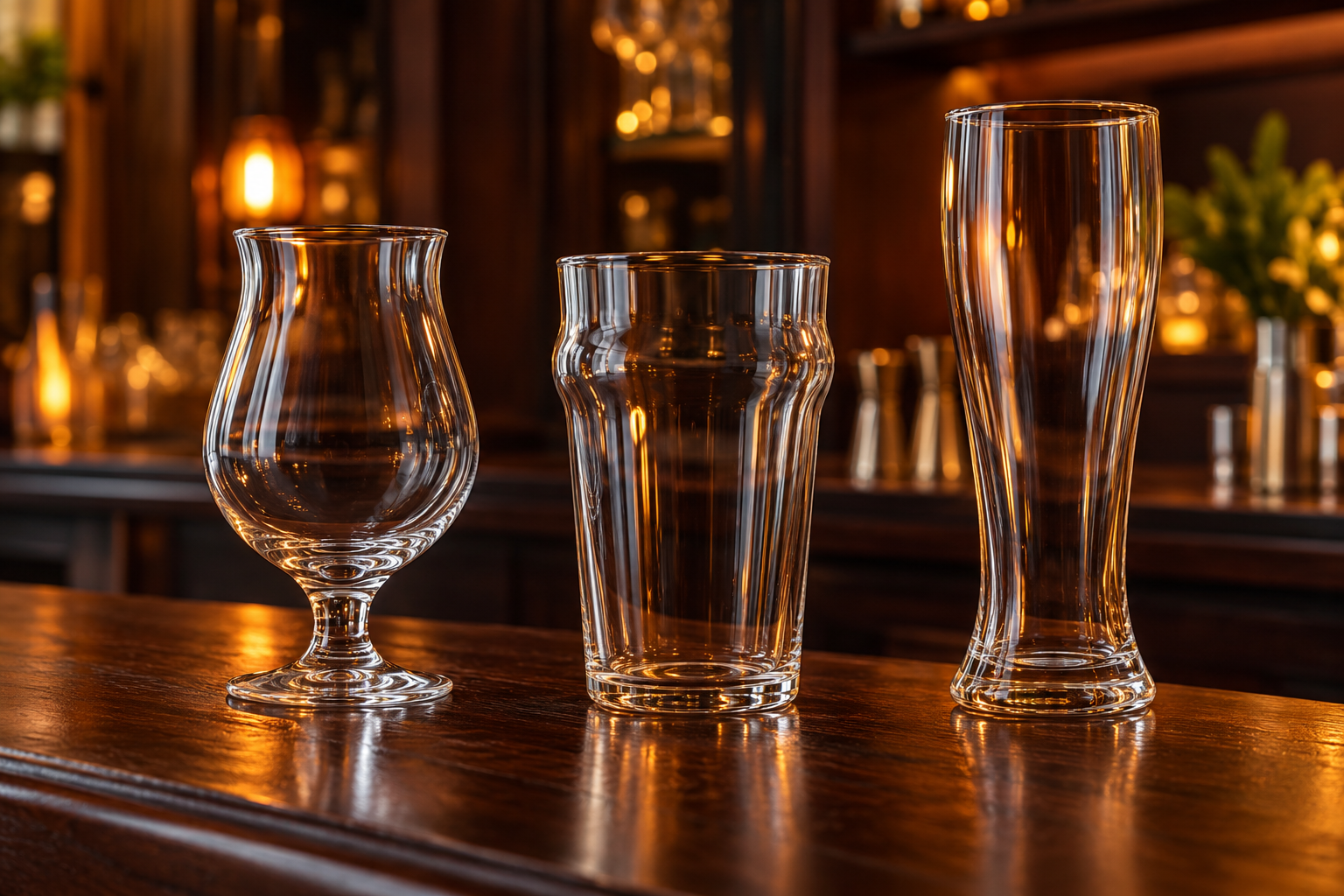
Glass shape changes head space, aroma concentration, foam support, warming, and sip size. Use clean glassware and a consistent pour before crediting the glass for every difference.
This guide was reviewed against current official product information where a model is discussed. Specifications and packages can change, so verify the exact label or manufacturer page before acting.
Begin with a clean control
Detergent film, grease, lipstick, dust, and towel lint can collapse foam and distort aroma before shape enters the experiment. Wash the glasses with a residue-free method, rinse completely, and air-dry them. Use the same beer, serving temperature, pour volume, and time after opening. If one glass is warmer or carries residue, the comparison no longer isolates shape. A plain clean glass is a better control than an ornate glass that was stored dusty on an open shelf.
Notice the opening
A narrower rim can concentrate aroma near the nose, while a broad opening releases volatile compounds over a larger area. Neither is universally better. A delicate beer may seem more expressive in a tulip or wine-like glass; an intensely aromatic beer may be easier to evaluate from a slightly wider rim. The opening also changes sip size and where liquid reaches the mouth. Compare calmly rather than assuming the narrowest glass must produce the strongest or most accurate aroma.
Look at the bowl
A rounded bowl creates head space above the beer and gives you room to swirl gently without spilling. That movement can release aroma, but aggressive swirling also drives off carbonation. Straight-sided pint glasses prioritize capacity, stacking, and easy drinking more than aroma concentration. A tall narrow pilsner glass showcases color and rising bubbles. These are design tendencies, not rigid rules. Beer condition, cleanliness, pour, recipe, and temperature often produce larger differences than the silhouette alone.
Understand foam support
Curves and inward-tapering rims can help hold a foam cap, while nucleation points etched in some bases encourage bubbles. Foam carries aromatic compounds and changes texture, but too much foam reduces the liquid pour and too little can mute the experience. Pour down the side at first, then raise the bottle or can to build an appropriate head. Use the same technique in both glasses. Do not mistake bubbles clinging randomly to a dirty surface for healthy carbonation.
Account for warming
A stem lets you hold the glass without wrapping a warm hand around the bowl. A handle does something similar for a mug. Thin walls may feel more delicate, while heavy glass changes thermal mass. Serving an aromatic strong ale slightly warmer can reveal detail, but leaving a light lager warm for too long may make it seem flat. Record starting temperature and taste at intervals. Glass shape influences the rate of change, but room temperature, pour size, and drinking pace influence it too.
Match common shapes to goals
Use a nonic pint when durability and a straightforward pour matter, a tulip when you want head space and aroma concentration, and a tall pilsner when appearance and foam presentation matter. Wheat-beer glasses allow a generous head and tall pour. Snifters suit smaller servings of stronger beers. You do not need a cabinet of branded glassware. Two or three versatile, clean shapes cover most home tasting, and a small wine glass can serve as a useful aroma-focused substitute.
Run a simple side-by-side test
Split one beer evenly between two clean glasses. Label them only after pouring, or ask another person to place them so expectations do not decide the result. Smell without swirling, smell after one gentle swirl, take equal sips, and revisit after five minutes. Note aroma intensity, foam retention, temperature, sip size, and overall preference. Repeat with a different beer style. One tasting reveals a preference for that beer and moment, not a universal law about glassware.
Store and handle glass safely
Inspect rims for chips and discard damaged glasses. Avoid extreme temperature changes that can crack glass. Store vessels where they remain clean and cannot fall, and lift stemware by the stem or base without twisting. When serving alcohol, use modest portions, offer water and food, and plan safe transportation. Glass choice can slow the pace through smaller pours, but it does not change alcohol content. The most useful glass is clean, intact, comfortable to hold, and suited to the serving size.
Quick checklist
- Start with residue-free glassware.
- Control beer, temperature, and pour volume.
- Compare opening, bowl, and hand contact.
- Observe foam without over-swirling.
- Repeat with more than one beer style.
- Discard chipped or cracked glassware.
Why these checkpoints matter
- Start with residue-free glassware. This defines the starting condition and prevents the rest of the process from resting on an assumption.
- Control beer, temperature, and pour volume. This narrows the choice to evidence you can verify on the exact label, model, or scene.
- Compare opening, bowl, and hand contact. This checkpoint reduces avoidable risk before another variable is introduced.
- Observe foam without over-swirling. This keeps the routine compatible with the person, product, material, or equipment involved.
- Repeat with more than one beer style. This creates a repeatable step instead of relying on memory or marketing language.
- Discard chipped or cracked glassware. This final review catches changes in condition, availability, or instructions before the next use.
Common questions
Do branded glasses make beer taste better?
Branding does not change the liquid. Shape, cleanliness, temperature, and expectation can change perception. Compare with an unbranded glass under the same conditions.
Is a pint glass wrong for craft beer?
No. It is practical and familiar. A different shape may emphasize aroma or foam, but enjoyment and safe serving matter more than rules.
Why do bubbles stick to the side?
Random bubble patches often form on residue, dust, or scratches. Etched nucleation points create a deliberate stream from the base.
Keep the decision useful
Write down the exact model, label, starting condition, and result. Change one variable at a time and return to the official instructions when anything is unclear. A short record makes the next decision easier and keeps an isolated result from becoming a rule that does not fit a different product, person, material, or environment.
Review the information again before repeating the process. Stop when comfort, safety, condition, or the manufacturer’s instructions provide a reason to stop. A useful routine stays simple because every step answers a real question.
For the next attempt, note what improved, what remained uncertain, and what should stay unchanged. This final check reduces guesswork and helps small problems become visible before they turn into repeated mistakes.
Keep the original instructions, model information, and observations together. Before repeating the process, confirm that the product, setting, environment, and intended result are still the same.
1 thought on “How Beer Glass Shape Changes Aroma, Foam, and Pace”