Reviewed and updated: October 14, 2026
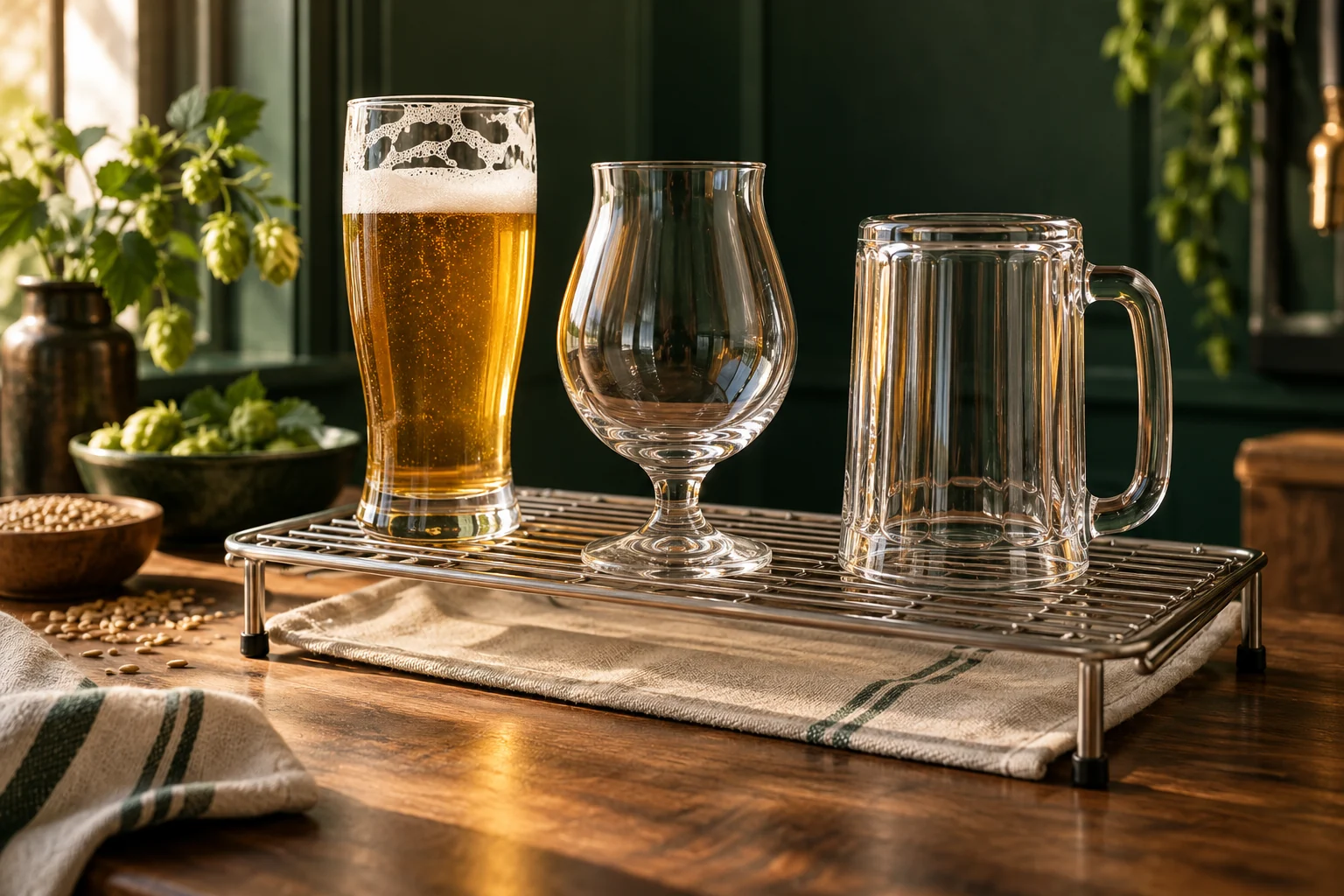
What beer-clean actually means
A glass can look clear and still carry a thin film of grease, rinse aid, lipstick, soap, or food residue. Beer professionals use the phrase beer-clean for glassware free of the contamination that disrupts foam and leaves irregular bubbles clinging to the wall. Clean glassware supports a stable head and lets the aroma and appearance come through as intended.
At home, the goal is not laboratory sterility. It is a repeatable routine that removes oils and cleaner residue without introducing lint or odors. You can achieve that with ordinary tools, but beer glasses should not share a greasy sink load or a towel used for dishes.
Start with a dedicated brush and basin
Keep a clean glass brush for beverage glassware only. A brush that has scrubbed a pan or salad bowl can carry cooking oil into the next wash. Wash the brush itself, rinse it thoroughly, and let it air-dry between sessions. Replace it when the bristles trap debris or bend enough to miss the inside wall.
If your sink is used for food preparation, clean and rinse it before filling a wash basin. A removable basin makes separation easier. Wash beer glasses after the meal dishes are finished, or before the sink is exposed to fat and sauce.
Use the right amount of suitable cleaner
Choose an unscented detergent intended for glassware and follow its dilution directions. More soap does not mean a cleaner glass. Excess detergent is harder to rinse and can leave a film that damages foam. Avoid household products that contain lotion, fragrance, or additives meant to leave a shine unless the glassware maker says they are appropriate.
Use water at the temperature recommended by the detergent and the glass manufacturer. Sudden temperature changes can stress glass, especially thin or chilled pieces. Wash the rim, interior, exterior, base, and any etched details where residue can collect.
Rinse until the water sheets cleanly
Rinse with fresh water, not the cloudy wash basin. Turn the glass so water reaches every surface. A well-rinsed glass often shows a smooth sheet of water rather than broken patches, although water chemistry can affect the appearance. If you still smell detergent, rinse again.
Do not add a final fragrance or sanitizer that is not approved for food-contact glassware. In a home setting, careful washing and complete rinsing are usually the most important steps. Follow local food-safety guidance if you are cleaning glassware for a business or event.
Air-dry instead of polishing with a towel
Set the glass on a clean, ventilated rack where air can circulate. A towel can leave lint and may transfer fabric softener, kitchen odor, or grease. Do not crowd wet glasses mouth-down on a solid mat; trapped moisture can develop a stale smell.
A rack that holds glasses slightly above the surface works well. Once completely dry, store them upright in a clean cabinet. If dust is a concern, choose a cabinet with a door and rinse the glass with cool water before serving.
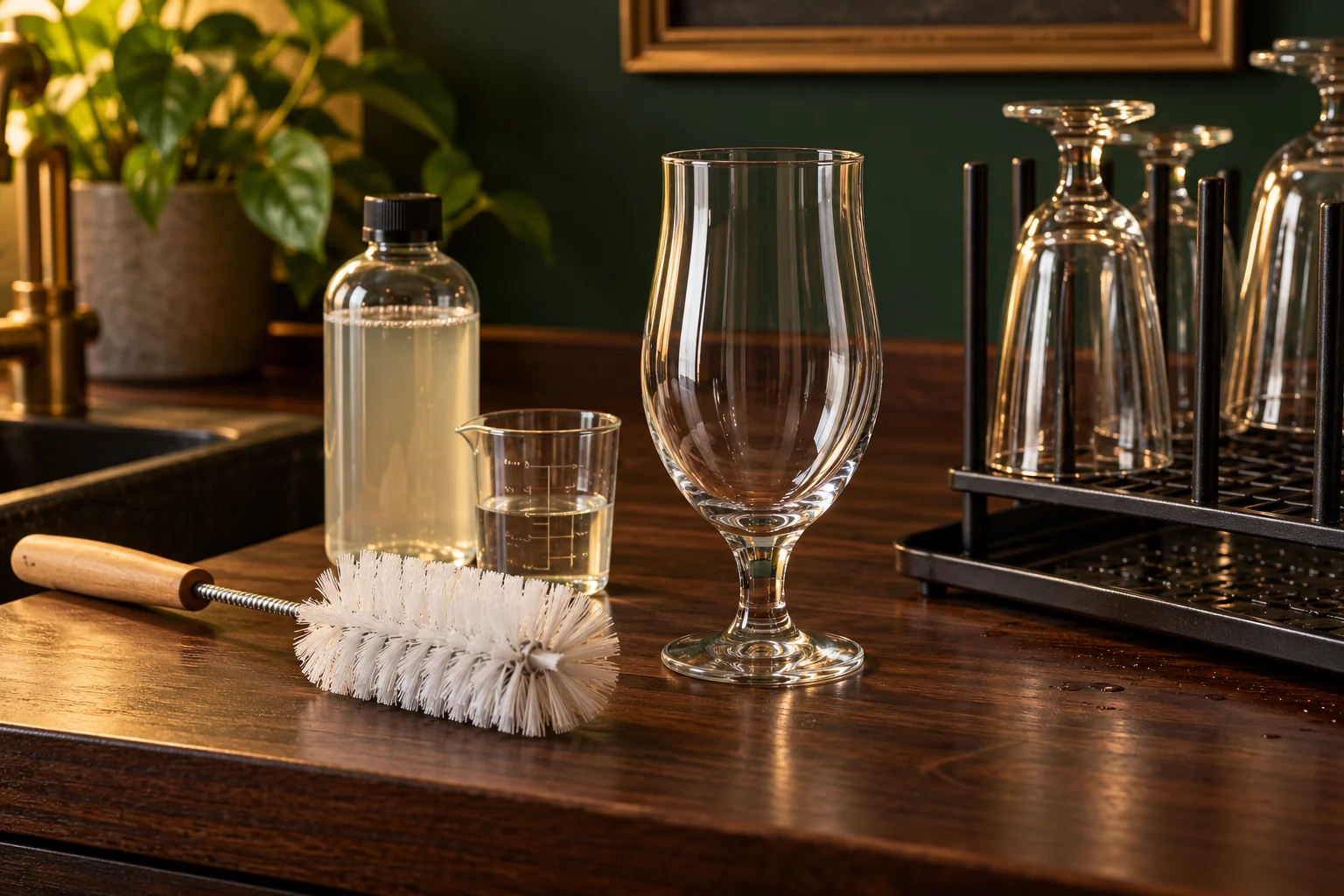
Check cleanliness before the pour
One common test is to wet the inside of the glass and look for an even water film. Another is to pour a beer and watch the bubbles. Streams of bubbles stuck to random spots may point to residue or scratches. Rings of foam that mark each sip can be a good sign, but the pattern also depends on beer style, carbonation, and glass shape.
Do not use a single pour as a verdict on the beer or glass. If several freshly cleaned glasses show the same problem, review the detergent amount, rinse water, drying rack, and dishwasher products.
Be careful with dishwashers
A dishwasher can work when the glass manufacturer allows it and the machine is clean, but mixed loads create risk. Food soil, rinse aid, scented detergent, and plastic odors can affect glassware. Delicate stems and printed decoration may also need hand washing.
If you use a dishwasher, give beer glasses space, use a glass-safe program, and skip greasy cookware in the same load. Check the machine filter and spray arms. Remove glasses only after they are cool enough to handle safely, then inspect for film and chips.
Store and handle glassware thoughtfully
Hold a clean beer glass by the base or lower portion rather than gripping the rim and inside. Keep it away from cooking spray, smoke, and scented candles. Shelves above a stovetop can collect an oily film even inside a cabinet.
Inspect rims for chips before every use. Retire damaged glassware; a sharp edge is not worth saving. Etched nucleation points are intentional texture on some beer glasses, while random scratches can trap residue. Clean decorative and specialty pieces according to the maker's instructions.
Chilling is optional, cleanliness is not
A frosted mug changes serving temperature and can add freezer odors or ice crystals. Many beer styles show more aroma in a clean glass served at an appropriate temperature without heavy frosting. If you enjoy a chilled glass, make sure it is dry, odor-free, and made to tolerate the temperature change. Our guide to frosted beer glasses explains the tradeoffs.
The same principle applies across the serving system. A spotless glass cannot correct dirty draft lines or poorly cleaned homebrew equipment. If you keg at home, pair glass care with the cleaning routine in our corny keg guide.
A practical home routine
Reserve a brush, use a clean basin, measure an unscented glassware detergent, scrub every surface, rinse with fresh water, and air-dry on a ventilated rack. Store the glasses only when fully dry. Before pouring, check the rim and give a dusty glass a cool-water rinse.
This routine takes a few extra minutes, but it protects the work already done by the brewer. Better foam, a cleaner aroma, and a glass free of stray odors make the beer easier to evaluate. The biggest improvement often comes from separation: keep beer glassware away from grease, fragranced towels, and mixed food loads.
Solve recurring film at the source
When every glass develops spots or a slippery feel, the cause may be water hardness, excess detergent, a dirty dishwasher, or rinse aid rather than the glass itself. Clean the machine filter, confirm the water heater and detergent are used as intended, and try washing one glass by hand in a separate basin. That comparison can narrow the problem.
Mineral spots are different from grease, but harsh household descaling methods can etch decoration or weaken some specialty glass. Follow the glass maker's instructions and use a food-contact-safe cleaner. If a brewery logo is printed or painted on the surface, avoid abrasive pads. Retire cloudy glass that is permanently etched when appearance matters for tasting; microscopic roughness can hold foam in unpredictable patterns and make cleanliness harder to judge.
3 thoughts on “How to Keep Beer Glasses Beer-Clean at Home”