Reviewed and updated: October 19, 2026
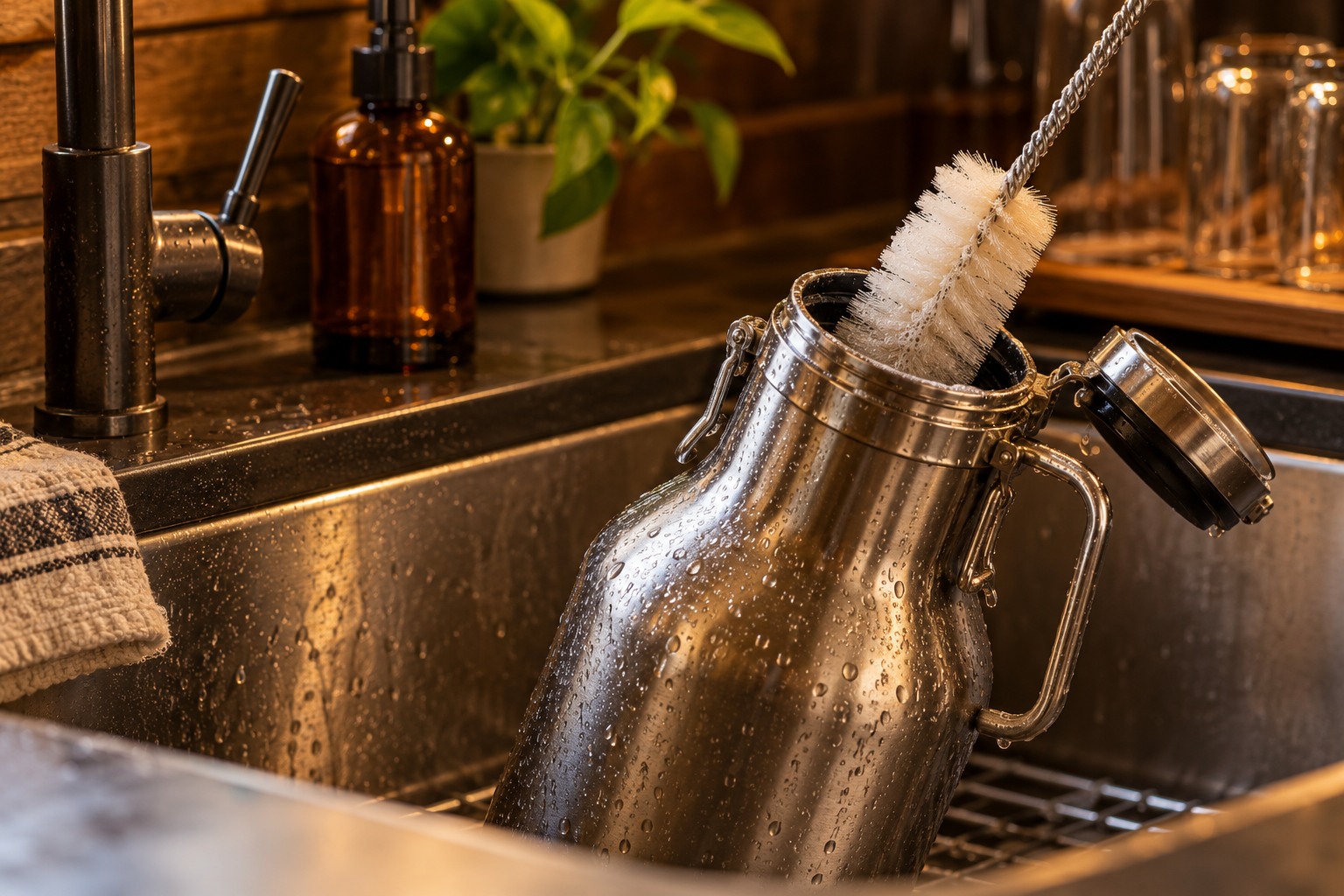
A growler stays usable when residue is rinsed promptly, every seal can dry, and the cleaning method matches the vessel. Lingering odor usually signals a part that still needs attention.
This guide was reviewed against current official product information where a model is discussed. Specifications and packages can change, so verify the exact label or manufacturer page before acting.
Rinse as soon as the pour is finished
Warm residue dries into threads, shoulders, caps, and gaskets. Empty the growler, rinse with water at the temperature allowed by its maker, and drain it before foam and yeast form a film. Never seal a damp, unrinsed growler for later.
Identify the vessel and closure
Glass, stainless steel, ceramic, coated metal, swing tops, threaded caps, and pressure-rated systems have different care limits. Read the current instructions for the exact body and cap. Dishwasher-safe language may apply to one component and not to seals, paint, or insulated lids.
Use a compatible cleaner
Choose the detergent or brewery wash recommended by the manufacturer and measure it accurately. Fragranced dish soap can leave an aroma if it is not rinsed completely. Never mix cleaners, and do not improvise with bleach, acid, or abrasive powder unless the maker explicitly allows it.
Reach shoulders and threads
A clean soft bottle brush should reach the base and curve without scratching the interior. Clean threads, cap channels, hinge areas, and removable gaskets separately when instructions allow disassembly. Replace a seal that remains stained, cracked, swollen, or odorous after proper cleaning.
Rinse until no film remains
Residual cleaner can flatten foam and alter aroma. Rinse every surface and component until water runs clear and no slippery feel or scent remains. Inspect against bright light. For opaque stainless vessels, use smell and touch as well as sight, without reaching into a narrow opening.
Dry completely while open
Drain the growler upside down on a stable rack, then store it open once water has escaped. A closed damp vessel creates the conditions for stale odor and microbial growth. Keep caps and gaskets separate until fully dry and prevent dust from falling into the opening.
Treat persistent odor as evidence
Do not cover stale smell with fragrance, coffee, or another beer. Repeat the approved cleaning method and inspect hidden seals. Odor that returns may indicate scratched surfaces, contaminated porous parts, coating damage, or a closure that needs replacement.
Check before the next fill
Smell the dry growler, inspect the seal, and confirm it closes normally. A brewery may refuse a dirty or damaged container. Bring it clean, open, and ready for the taproom procedure, then follow the brewer’s advice for cold storage and consumption.
Quick checklist
- Rinse immediately after use.
- Match cleaning to vessel material.
- Clean caps, threads, and gaskets.
- Rinse away every cleaner trace.
- Dry fully before reassembly.
- Replace damaged or odorous parts.
Why these checkpoints matter
- Rinse immediately after use. This defines the starting condition and prevents the rest of the process from resting on an assumption.
- Match cleaning to vessel material. This narrows the choice to evidence you can verify on the exact label, model, or scene.
- Clean caps, threads, and gaskets. This checkpoint reduces avoidable risk before another variable is introduced.
- Rinse away every cleaner trace. This keeps the routine compatible with the person, product, material, or equipment involved.
- Dry fully before reassembly. This creates a repeatable step instead of relying on memory or marketing language.
- Replace damaged or odorous parts. This final review catches changes in condition, availability, or instructions before the next use.
Common questions
Can a growler go in the dishwasher?
Only if the exact manufacturer instructions say the body and each component are dishwasher safe.
Should I store it capped?
Store only after every component is fully dry; many users keep the dry vessel open to avoid trapped moisture.
Why does clean beer lose foam?
Cleaner residue, grease, or scratched surfaces can affect foam. Rinse fully and inspect the vessel.
Keep the decision useful
Write down the exact model, label, starting condition, and result. Change one variable at a time and return to the official instructions when anything is unclear. A short record makes the next decision easier and keeps an isolated result from becoming a rule that does not fit a different product, person, material, or environment.
Review the information again before repeating the process. Stop when comfort, safety, condition, or the manufacturer’s instructions provide a reason to stop. A useful routine stays simple because every step answers a real question.
For the next attempt, note what improved, what remained uncertain, and what should stay unchanged. This final check reduces guesswork and helps small problems become visible before they turn into repeated mistakes.
Keep the original instructions, model information, and observations together. Before repeating the process, confirm that the product, setting, environment, and intended result are still the same.
Use the result as one observation rather than a promise. Conditions change, and the safest next step is the one supported by the current label, manual, evidence, and the limits you can verify.
Use the result as one observation rather than a promise. Conditions change, and the safest next step is the one supported by the current label, manual, evidence, and the limits you can verify.
Use the result as one observation rather than a promise. Conditions change, and the safest next step is the one supported by the current label, manual, evidence, and the limits you can verify.
Use the result as one observation rather than a promise. Conditions change, and the safest next step is the one supported by the current label, manual, evidence, and the limits you can verify.
Use the result as one observation rather than a promise. Conditions change, and the safest next step is the one supported by the current label, manual, evidence, and the limits you can verify.
Use the result as one observation rather than a promise. Conditions change, and the safest next step is the one supported by the current label, manual, evidence, and the limits you can verify.
Use the result as one observation rather than a promise. Conditions change, and the safest next step is the one supported by the current label, manual, evidence, and the limits you can verify.
Use the result as one observation rather than a promise. Conditions change, and the safest next step is the one supported by the current label, manual, evidence, and the limits you can verify.
Use the result as one observation rather than a promise. Conditions change, and the safest next step is the one supported by the current label, manual, evidence, and the limits you can verify.
1 thought on “How to Clean a Beer Growler Without Trapping Odors”