Reviewed and updated: November 15, 2026
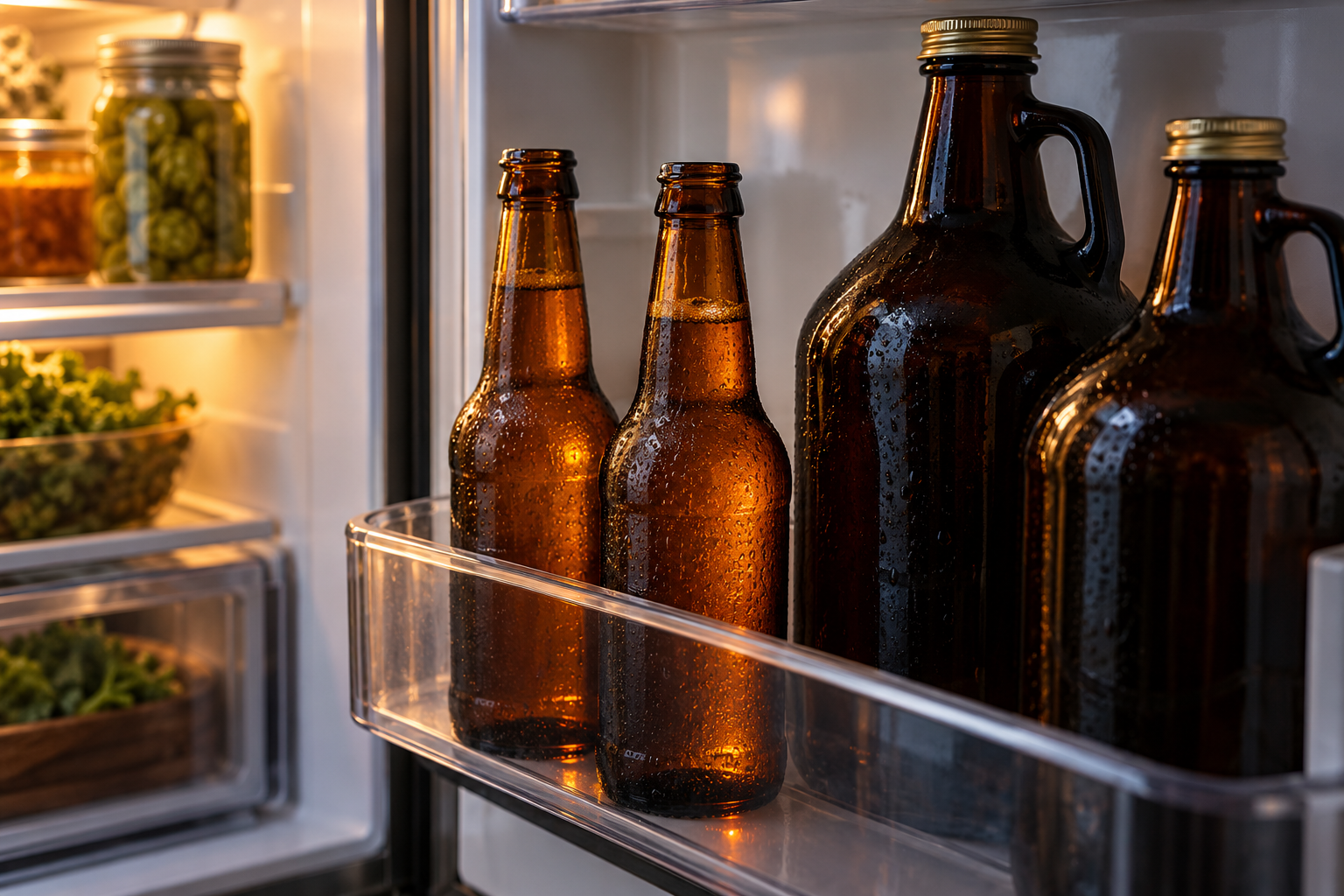
A half-finished bottle of good beer deserves a little care, but it doesn’t need to become a project. Save it only when you know it has been handled cleanly, close it with a suitable lid or stopper, and put it in the fridge promptly. Then give it a real plan: enjoy it soon or use it in a recipe that suits the beer. Don’t expect tomorrow’s pour to be quite the same as the first.
The important distinction is between beer that has lost some sparkle and beer you have a reason to distrust. A flatter lager can be disappointing without telling you anything definite about safety. A mystery glass from the end of a party, on the other hand, isn’t worth rescuing. Here’s how to make that call without wasting good beer or gambling on questionable leftovers.
Start with what’s actually left
The easiest beer to save is the portion that stayed in a clean bottle while you poured a glass. You know where it came from and what has touched it. That’s a different situation from beer that people have been drinking straight from, a shared tasting glass, or a container that has been left unattended.
Before reaching for a stopper, think about that history. Was the beer kept somewhere clean? Has anything been added to it? Can you confidently identify it and when it was opened? Uncertainty here is a good reason to let it go. Moving questionable beer into a clean bottle won’t undo whatever happened beforehand.
A few mouthfuls left in a glass usually aren’t worth transferring. Pouring again adds handling, and a drinking glass is awkward to close properly. There’s no obligation to finish a beer just because it’s open, either. A smaller pour next time is often the nicest solution.
Keep it cold, covered and easy to find
Put the portion you intend to save in the fridge rather than leaving it on the table while the evening carries on. Cold storage slows the changes that make beer taste tired. It doesn’t return the beer to its unopened condition, and the printed date on the original package isn’t a fresh storage guarantee once you’ve opened it.
Keep your food refrigerator at 40°F or below, using an appliance thermometer to know the actual temperature. The FDA’s refrigerator guidance explains that general food-storage standard. It isn’t a beer-specific promise about how many days an opened bottle will last.
Give the saved beer an obvious place where it won’t be forgotten. A simple note with the opening date and intended use is enough. “Opened Friday, for tomorrow’s stew” is more helpful than an unmarked bottle behind the condiments. Keep it away from leaking raw foods and other potential contamination.
Use a closure that belongs on the container
A clean, compatible closure helps limit spills, outside odors and further exposure to air. For a bottle that still contains carbonated beer, use a stopper or closure intended for that bottle and a carbonated drink. An improvised lid on a random jar isn’t an equivalent substitute.
Covering an opened can can help keep things out, but it doesn’t recreate the original sealed package. Nor does pushing a loose crown cap back onto a bottle make it securely resealed. Our advice on opened bottles, cans and growlers looks more closely at those different containers.
Leave the beer in its original container when you have a suitable way to close it. Avoid unnecessary transfers, splashing and repeated opening just to see how it’s doing. If a transfer is needed, use a clean, food-safe container suited to the drink, and don’t add water or other ingredients as a preservation trick.
Expect the second pour to change
Carbonation escapes when a package is opened, and exposure to oxygen starts another part of the freshness story. A closure can help protect what remains; it can’t put the original aroma and fizz back. The result may feel softer, smell less lively, or simply be less enjoyable than the first glass.
A bright, hoppy beer can be especially disappointing when its aroma fades. A crisp lager may seem less refreshing without its familiar sparkle. Stronger beer isn’t automatically a better candidate for leftovers, either. Think about the character you enjoy in that particular beer instead of treating alcohol strength as a storage rule.
This is why we’d save a clean portion for a nearby occasion rather than start a collection of partly used bottles. There’s no single dependable deadline that covers every beer, package and handling history. Follow any specific opened-storage directions from the producer, and don’t stretch them because the beer was expensive or hard to find.
Quality clues aren’t a safety test
Dull hop aroma, a papery note or reduced fizz can be signs that a beer is past its best. They don’t prove that the beer is contaminated, and the absence of those changes doesn’t prove that it’s safe. You can’t establish safety by taking a cautious sip.
Visible mold or unexpected growth, a new slimy or ropey texture, obvious contamination, or a damaged container are reasons to discard the beer. Don’t skim off a suspect patch or try to save the rest. When the storage history is unknown, an ordinary smell isn’t enough to overrule that uncertainty.
Style still matters when judging what looks normal. Some beers are intentionally cloudy, sour or bottle-conditioned with yeast sediment. Know what was in the bottle to begin with, rather than labeling every haze a fault. But don’t use a beer’s unusual style as an excuse to ignore a change you can’t explain.
Cooking can be a plan, not a rescue mission
A clean leftover with a known storage history may be useful in a recipe, even when its carbonation no longer makes a satisfying drink. Decide on the dish while you put it away. A modest amount for a sauce or braise is a clearer plan than keeping a bottle indefinitely because beer sometimes belongs in cooking.
The flavor has to suit the food. A strongly bitter IPA can push a dish in a different direction from a mellow brown ale, so follow a recipe designed for an appropriate style. Flatness alone doesn’t tell you whether the beer will taste good in that dish.
Cooking isn’t a way to make suspicious beer acceptable. Discard anything with questionable handling, contamination or spoilage concerns instead of trying to boil the problem away. Treat the finished dish according to its own food-safety and storage requirements, too; adding beer doesn’t give leftovers special protection.
Make the next bottle easier to enjoy
Smaller servings let you enjoy a big bottle without committing to a big glass. Share a suitable bottle when company wants the same beer, or choose a smaller package when you usually drink alone. Keep unopened beer unopened until you want it. That beats trying to preserve the last third of several different beers.
For the bottle already in front of you, keep the decision simple: known clean history, suitable closure, prompt refrigeration and a near-term purpose. Accept that quality may change, and let uncertain beer go. The aim is to enjoy what you’ve saved, not to prove how long you can keep it.