Reviewed and updated: November 10, 2026
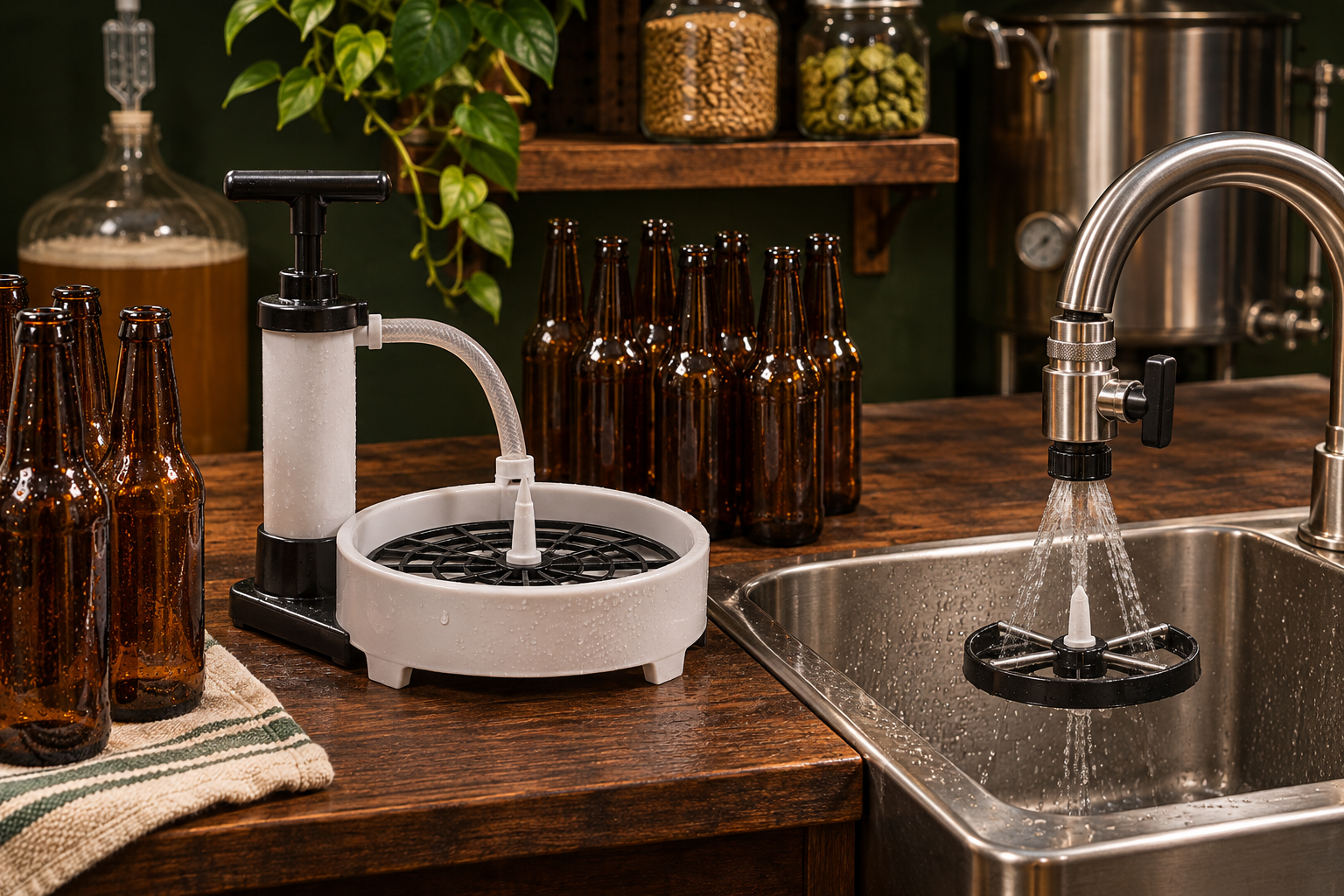
If bottle prep is the part of brew day you keep putting off, a rinser can make the job feel less like a long shift at the sink. The trick is buying the right kind. We’d look at a faucet-connected washer when rinsing lots of bottles is the bottleneck, and a countertop pump rinser when you want a handy sanitizer station beside the filler.
Those are different jobs. A jet of water helps rinse a bottle, while a reservoir rinser gets sanitizer into one you’ve already cleaned. Neither does away with inspecting the glass or following the sanitizer’s contact time. Once that distinction is clear, choosing between the two gets much easier.
Fermtech Double Blast Bottle Washer
A two-bottle faucet washer for the rinsing stage, provided it fits your sink and faucet. Check the adapter and room for drainage first. This button opens Amazon search results for the Fermtech Double Blast Bottle Washer.
View on Amazon (paid link)
Vinator Bottle Rinser
A countertop pump rinser for getting sanitizer into bottles you have already cleaned. Keep it beside a stable draining area and follow your sanitizer label. This button opens Amazon search results for the Vinator Bottle Rinser.
View on Amazon (paid link)
Start with the bottles waiting in your brewery
Think about what usually arrives at your sink. If it’s a case of bottles with dried yeast or sticky residue, the first job is proper cleaning. A faucet washer can help rinse loosened deposits after soaking and brushing. It won’t turn a questionable bottle into a clean one just because the water comes out looking clear.
If your bottles are already clean and stored ready for packaging, a pump rinser is the more focused purchase. You mix sanitizer according to its label, put the clean bottle over the nozzle, and use the pump to wet the inside. Keep to the product’s contact-time and draining directions before filling.
Keeping cleaning and sanitizing as two separate jobs helps you decide which tool would actually save you effort. If you’re sorting out the cleaning stage, our explanation of PBW brewery cleaner helps put that step in place before you reach for the sanitizer.
A faucet washer makes its home at the sink
The Fermtech Double Blast Bottle Washer connects to a faucet through a hose and adapter. Its two spring-loaded jets are designed to rinse two bottles when they’re pressed down. That’s an appealing setup when you’ve got plenty to get through and enough room to inspect and drain them beside the sink.
Check your faucet before buying. The thread, adapter, hose reach, sink depth, and water pressure all affect whether the arrangement will be comfortable to use. Pull-out sprayers and unusual aerators may need a different adapter or may not suit it. Don’t force a connection that doesn’t fit.
Picture the bottles in place, rather than just the washer on its own. You need room to hold them straight and move them onto a stable draining area. Start with modest pressure and keep the rims away from your hands. Wet glass is slippery enough without trying to balance several bottles at once.
This kind of washer makes less sense if connecting it means dismantling an awkward kitchen faucet every batch. A tool you can set up easily is more likely to earn its keep than one that turns bottle prep into another plumbing job.
A pump rinser belongs near the clean bottles
The Vinator is a countertop reservoir-and-pump design. Clean bottles go over the nozzle and are pressed down so solution reaches the inside. Beside a bottle tree or draining rack, it can give you a neat little station close to where you’ll fill.
We like that arrangement when walking back and forth to the sink is what makes packaging feel disjointed. You can keep clean bottles moving toward the filler without mixing them back into the washing area. Check that your bottle mouths sit securely over the nozzle and that the base stays steady as you pump.
Wide or unusual bottles may handle differently from ordinary beer bottles, so don’t assume every container will fit the same way. Make sure the spring returns smoothly and you can use the motion comfortably. That’s more useful than comparing the bowl size without thinking about the bottles you actually own.
Follow the sanitizer’s dilution, water-quality, temperature, contact-time, and draining instructions. Replace visibly dirty solution and keep to its reuse guidance. “No-rinse” doesn’t mean you can mix it by eye or leave the same batch in the bowl indefinitely.
Would you get enough use from both?
You might. A faucet washer and a pump rinser can each have a clear place in the same bottle-prep routine: wash and rinse at the sink, then sanitize clean bottles at the filling station. That makes more sense than buying two tools that both end up sitting beside the same crowded sink.
On the other hand, you may only need one. If you keep a reliable supply of clean bottles, a countertop rinser could solve the part that’s slowing you down. If the slow job is rinsing a large batch after cleaning, the faucet washer deserves the closer look.
Walk through the route before ordering: dirty bottles, washing, inspection, clean rack, sanitizing, filling, and capping. Leave enough room to tell prepared bottles from ones still waiting. Our bottle-filler guide can help you think about the next step without crowding the worktop.
Keep the glass and the work area in good shape
Inspect the base, shoulder, neck, and rim under good light. Retire bottles with cracks, chips, persistent contamination, or a doubtful history. Don’t put damaged glass onto a spring nozzle and hope the rinse will sort it out.
Keep children and pets out of the packaging area, wear closed shoes, and wipe up spills as you go. Give wet bottles a stable draining place and keep electrical equipment away from splashes. These are small arrangements that make a long line of bottles easier to handle without rushing.
It helps when a friend is lending a hand, too. Agree which rack is clean and which bottles are ready to fill. A simple, obvious order is more useful than an impressive-looking lineup of equipment nobody else understands.
Cleanup should be part of the buying decision
For a faucet washer, release pressure, disconnect by the fitting rather than pulling the hose, and check the jets for debris. Follow the maker’s cleaning instructions and let the parts dry before storage. Only use a dishwasher where the instructions allow it.
With a pump rinser, dispose of used solution as its label directs, then clean the bowl, pump, and nozzle. Don’t put it away damp with residue inside. Store it as directed, without leaving the pump compressed, and inspect the spring, seals, hose, and adapters before the next batch.
Our take
We’d choose the faucet washer for a compatible sink and a lot of rinsing, or the pump rinser for clean bottles heading toward the filler. Buy both only when each has its own job and space. The useful upgrade is a smoother bottling day, with intact, properly prepared bottles ready for the beer you’ve worked on.