Reviewed and updated: November 10, 2026
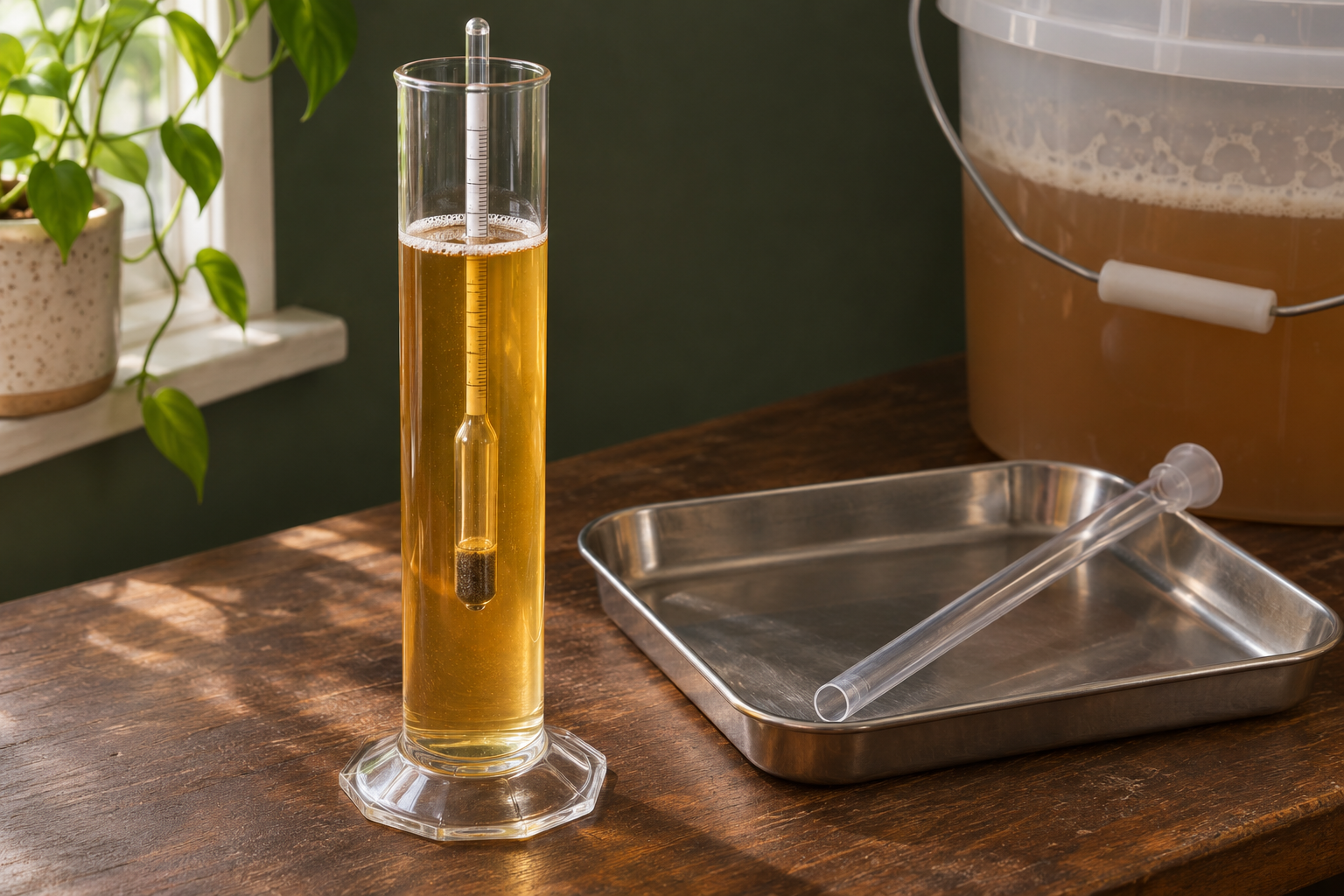
If taking a gravity reading usually leaves you juggling a sampler, a jar, and somewhere to put them both, Fermtech The Thief is worth a look. We’d consider it for a bucket or carboy you can reach comfortably from above. It draws the sample and can hold a suitable hydrometer, so there’s one less handoff between your beer and the reading.
The important catch is its length. This is a 19-inch sampler, and it needs enough room above the fermenter as well as enough beer beneath it. If your fermenter lives under a low shelf, or you already have a handy sampling valve, a separate jar may remain the easier answer. Buy this to make a familiar job less awkward, rather than just to add another brewing gadget.
One tool for drawing the sample and reading it
The Thief is a clear acrylic sampler designed to accept a standard hydrometer. Fermtech describes collecting liquid by dipping the tool and releasing it by touching the tip against a rim. That gives it a different role from a narrow sampling tube that simply moves beer into another container.
You can see the appeal on an ordinary brew evening. You want to check how the batch is getting on, then get the fermenter closed again without spreading equipment all over the bench. If transferring the sample is the part that feels fiddly, combining the jobs is a useful idea.
If you already draw a sample neatly into a jar and get a clear reading, there’s less reason to change. A new sampler doesn’t need to earn a place in every brewery. The best little tools usually fix something that was bothering you before you started shopping.
Fermtech The Thief 19-Inch Wine and Beer Sampler
A long, clear sampler that can also hold a suitable hydrometer. Check the space above your fermenter and the fit of your instrument first. This button opens Amazon search results for Fermtech The Thief 19-inch sampler.
View on Amazon (paid link)
Look at where your fermenter actually sits
Measure the space above the fermenter in its normal spot. A long sampler needs to go in and come back out without catching a shelf or making you wrestle with the vessel. That’s easy to overlook when you’re picturing the empty bucket on the kitchen floor rather than a full batch inside a fridge.
You also need a comfortable route through the opening. Don’t force an acrylic tool through a tight neck or plan on tilting a heavy fermenter just to take a reading. If the opening or clearance is uncertain, check the exact fit before buying. A tool that’s simple to handle is much more useful than one that only just squeezes into place.
Think about where you’ll read the hydrometer afterward, too. A clear, steady view is the goal. If your current test jar sits neatly on the bench while you write down the number, that convenience deserves some credit when you compare it with holding a longer sampler.
Your hydrometer still needs room to float
The Thief can hold a hydrometer, but your particular instrument needs enough clearance and enough liquid to float freely. It shouldn’t be leaning against the wall or resting on the bottom. A number you can see isn’t much use if the float can’t move properly.
Check the fit rather than assuming every instrument sold as standard will behave the same way. Keeping your existing jar is a sensible fallback, especially if it makes the scale easier to read. Our advice on using a hydrometer is there if you want a refresher on the reading itself.
That doesn’t make this sampler a complicated purchase. It just keeps the useful bit in focus: drawing a sample more conveniently while still getting a reading you can trust. Once the fit is right, there’s no need to make the job more elaborate than it was before.
Small batches need a little more thought
A deep batch in a carboy and a small batch spread across a wide bucket aren’t the same sampling job. The depth of the beer where you insert the sampler matters more than the total size written on the fermenter. A big bucket can still hold a fairly shallow batch.
If you brew small amounts, think through how much beer you normally use for a reading and whether your current jar handles that well. We wouldn’t assume The Thief saves beer in every setup. Its attraction is the combined sampling and reading arrangement, provided that arrangement works with your batch.
There’s also something to be said for keeping a simple routine when you brew only now and then. If your existing tools are easy to find, clean, and use, changing them may not add much. On the other hand, an awkward transfer you repeat every batch is a fair reason to try a different sampler.
What if you already have a sampling valve?
A suitable valve can let you draw beer straight into a jar without reaching through the top. That’s handy in a cramped fermentation space. It adds its own cleaning job, but it may already give you the tidy sampling routine you’re looking for.
The Thief makes more sense when top access is easy and you don’t want to modify a fermenter just to take occasional readings. We’d compare it with the setup you actually use, rather than with an imaginary perfect brewery. If a valve and jar already work well, keep enjoying that simplicity.
Whichever route you use, follow the vessel’s instructions and keep the equipment clean and sanitized. The convenience of a sampler is only worthwhile when it fits the care you’re comfortable giving it. You want the gravity check to be a quick, useful part of brewing, not the step you keep putting off.
Give it somewhere to live between batches
A 19-inch tool needs a sensible cleaning and storage spot. Picture your sink and drying area before buying. You should be able to rinse, inspect, sanitize, and drain it without balancing it across a cluttered worktop. Follow Fermtech’s care instructions for the acrylic; don’t assume treatment suited to stainless fittings is right for this tool.
Have your hydrometer and receiving container ready before opening the fermenter, and keep sanitized surfaces from touching the bench. After the reading, keep the sample separate from the batch. Returning handled beer to save a small amount isn’t worth putting the rest of your brew at risk.
Write down the result while it’s in front of you. A few useful batch notes make it easier to see how the beer is progressing and remember what you changed. The sampler helps you get the number; the record helps you make something of it next time.
Our take
We’d put The Thief on the list if you have easy top access and want your sampler to double as a hydrometer chamber. Check the length, opening, and instrument fit first. If your separate jar or sampling valve already makes the job easy, there’s no rush to replace it. This is a small convenience upgrade for the right setup, rather than a must-have for every batch.