Reviewed and updated: November 10, 2026
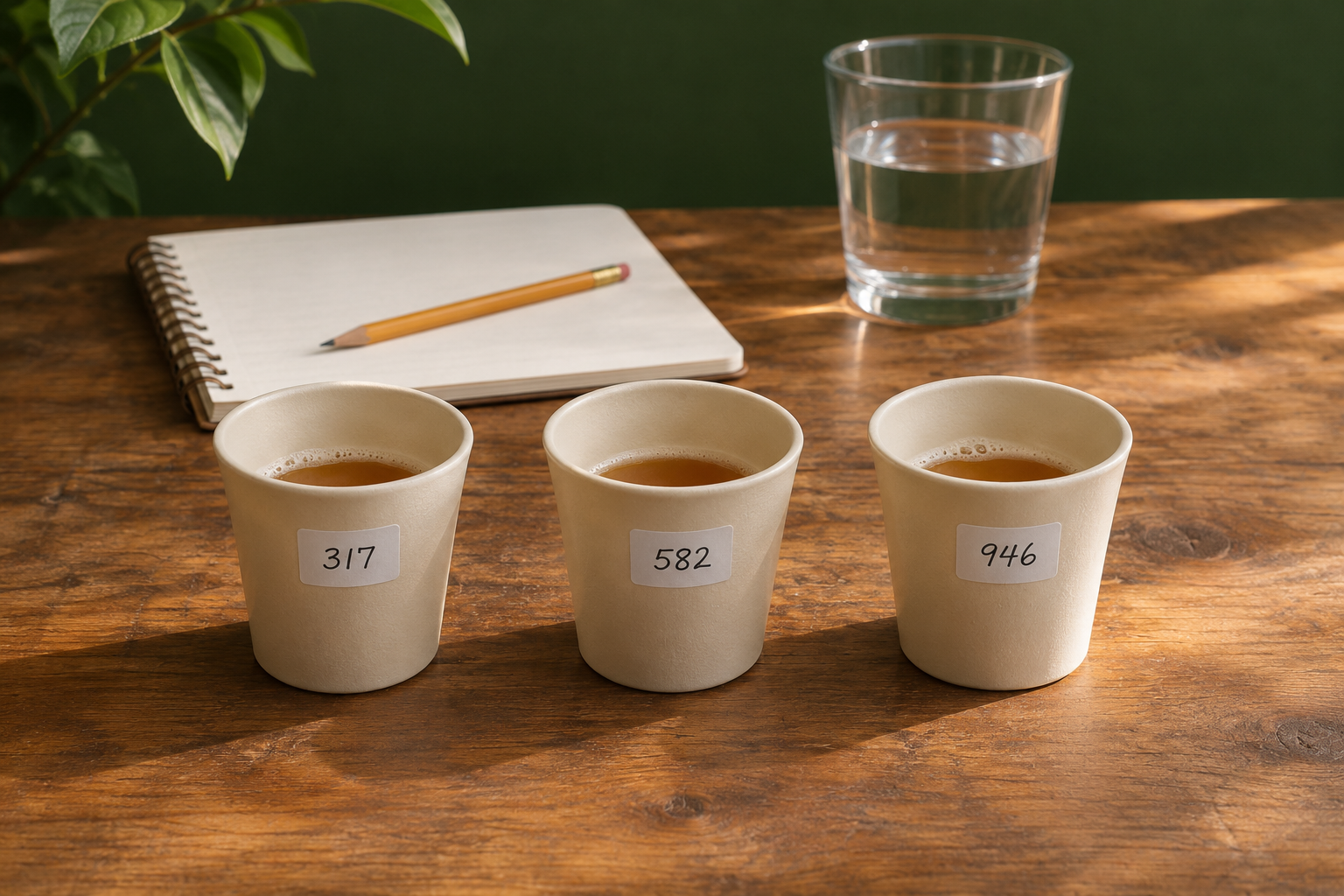
Ever wondered whether that recipe tweak actually changed the beer, or whether you’re tasting what you expected to taste? A blind triangle test is a fun way to explore that with a few beer-loving friends. Each person gets three small, coded pours. Two are the same beer, one is different, and the job is to pick the odd one out.
You don’t need a judging room or a shelf of fancy glassware. Two finished beers, identical cups, a helper, and a few notes will get you started. Keep the question small and the atmosphere relaxed. You’re trying to learn something about your homebrew, not catch anyone out for failing to spot a difference.
Give the tasting one good question
Maybe you’ve brewed the same pale ale with two yeasts, or split a batch between two fermentation conditions. Those are useful comparisons because you can say what you changed. Write that question down before pouring, along with the batch names and packaging dates.
If you changed the yeast, hops, and fermentation temperature together, you can still compare the beers. Just remember you’re comparing the whole package. The tasting won’t tell you which change caused the difference. A little context in your batch notes makes the result more useful when you brew again.
Keep “can you tell them apart?” separate from “which do you like better?” You might spot the odd beer and still prefer the other one. You might also enjoy both without being able to tell which cup is different. Neither result makes someone a better or worse beer drinker.
Set up the cups without giving the game away
Give each person three identical, clean, food-safe cups. Opaque cups help if color or clarity would reveal the answer before anyone takes a sniff. Check that they don’t smell of the cupboard or washing-up liquid. You want the beer doing the talking.
Use about an ounce in each cup for this small home tasting, with the same amount in all three. That’s enough for a few little comparisons without turning the exercise into a big flight. Put water and a discard container on the table so nobody feels they need to finish every sample. Keep participation voluntary and sort out transport before drinking.
Give every cup an unrelated code, such as 317, 582, or 946. Even the two matching beers need different codes. Labels like A1, A2, and B rather spoil the puzzle. Keep the key on a separate sheet, out of sight until everyone has written an answer.
In your private notes, call the beers A and B. There are six possible serving orders: AAB, ABA, BAA, BBA, BAB, and ABB. For six tasters, shuffle those six orders and give one to each person. Repeat the balanced set for a larger group. That avoids always putting the odd beer in the same position.
Give both beers the same treatment
Bring the beers to comparable serving conditions and use the same pour size and timing. Keep the bottles out of sight. If one beer has been sitting open much longer, you may end up comparing time in the glass rather than the recipe change you wanted to explore.
For bottle-conditioned homebrew, decide how you’ll handle sediment before starting. Don’t give one cup the cloudy final pour while the others are clear. The same goes for a big difference in foam or serving level: it can give someone a clue that has little to do with flavor.
A helper makes this easier. One of you can handle the codes while the other pours and brings out complete sets. If you know the answer, keep your comments and reactions neutral. An encouraging nod at the “right” cup can be surprisingly helpful to someone who is still deciding.
If you can’t comfortably serve everyone together, use manageable groups and keep the delay before tasting similar. You don’t want one person’s samples warming for ages while another gets a freshly poured set straight away.
Have a quick practice with water if the pouring feels awkward. Getting comfortable with the cups and the order first means you can enjoy the beer tasting instead of spending it worrying about which sample went where.
Let everyone have their own first impression
A quiet table away from cooking, smoke, perfume, and cleaning products is a good start. The BJCP’s beer-evaluation advice covers why the surroundings and equipment matter. At home, the useful idea is simple: give the beer a fair chance to be noticed.
Tell everyone the same thing: two cups contain the same beer, one contains a different beer, and they should write down the different cup’s code. Leave out hints about which beer ought to smell fruitier or finish drier. Once you’ve suggested a flavor, it’s hard to stop looking for it.
Let people smell, sip, revisit a cup, and pause with water in whatever order suits them. Ask for individual answers before the conversation starts. A confident friend shouldn’t get to decide what the whole table notices.
A small answer sheet only needs a name or identifier, the three codes, and the chosen odd cup. A brief description or confidence note is useful, too. Keep the answer hidden until the last person is finished, even if everyone else is eager to compare notes.
The conversation is where it gets interesting
Once the answers are in, talk about what you noticed. “This one seemed drier at the end” gives you something to explore. “Obviously the better batch” doesn’t tell you much. You don’t need elaborate tasting language; a few honest impressions are more helpful than reaching for impressive words.
If you’d like to ask which beer people prefer, serve the two beers again under fresh codes and ask that separately. Keep those answers with that question. It makes the notes much easier to follow later, especially when someone can tell the beers apart but prefers the one you didn’t expect.
Remember that a guess has a one-in-three chance of being right. Two correct answers among six independent tasters is the number you’d expect on average from guessing, though individual sessions vary. One person’s repeated attempts aren’t the same as several independent tasters, particularly after they’ve had feedback.
Take a useful idea into the next brew
For a casual session, record how many people took part, how many picked correctly, and how you served the beer. Don’t keep adding rounds until the result looks convincing. Formal claims need a planned sample size and statistical method; an evening with friends can simply leave you with an honest set of observations.
Not finding a difference doesn’t prove the beers identical. Finding one doesn’t establish why it happened. Keep the code key and comments with the batch record, then use them to shape the next comparison. A narrower question, a tidier pour, or a recipe tweak worth repeating is a good evening’s work, especially when you’ve enjoyed talking beer along the way.