Reviewed and updated: November 12, 2026
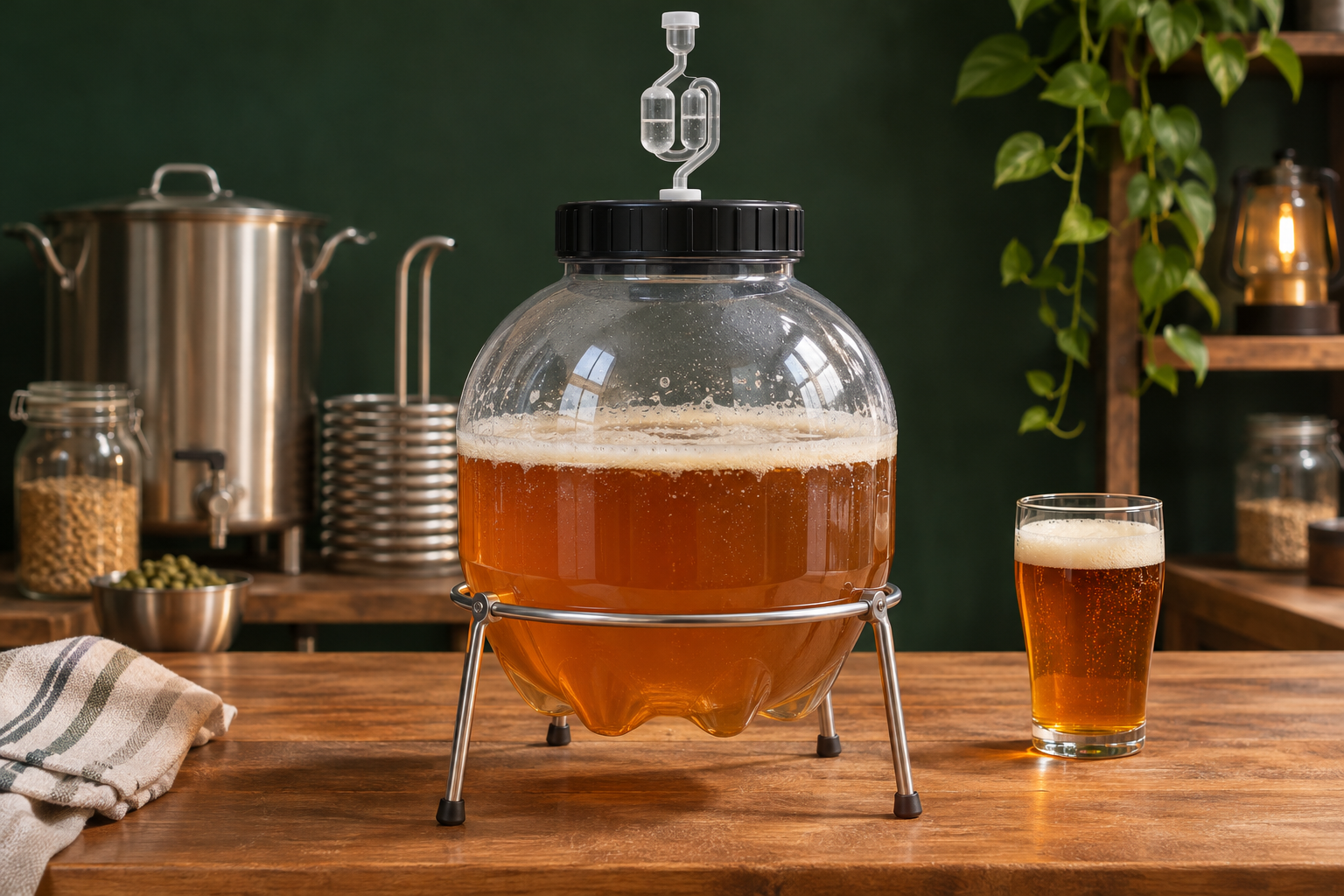
The FermZilla All Rounder 30L makes the most sense as a bridge between a basic fermenting bucket and a keg setup. We’d put it on your shortlist when you want to move finished beer through a closed transfer and you’re comfortable looking after pressure-rated equipment. Its clear tank keeps the enjoyable, watch-the-yeast-work side of homebrewing, while the rounded design keeps things simpler than a conical with a collection chamber.
For ordinary bottling with no plans to change your routine, a sound bucket may already do everything you need. The All Rounder’s appeal grows when you have a specific next step in mind: fitting a floating pickup, transferring to a keg, or using an appropriately equipped pressure-fermentation setup. Buy it for that next step, with the necessary fittings included in your plan.
A clear view without the bottom-valve assembly
The transparent PET body lets you see the foam rising, yeast settling, and the beer changing as fermentation moves along. That’s part of the pleasure of making your own beer, particularly when friends are curious about what’s happening in the brewing corner. You can look through the wall without lifting the lid just to satisfy that curiosity.
The All Rounder has a rounded base supported by a stand. You don’t get a bottom collection chamber for dropping out sediment or harvesting yeast. We see that as a useful simplification if you mainly want to ferment a batch and move the beer onward. For regular yeast collection, a suitably equipped conical offers a different kind of convenience. Our conical-fermenter buying advice can help you decide whether that extra hardware would earn its place.
Start with the whole package
KegLand’s standard 30L package lists the tank, stainless stand and handle assembly, pressure lid and threaded ring, airlock, pressure-relief valve, temperature sticker, and volume sticker. The pressure-kit fittings shown in some photos are separate. That distinction matters: a vessel capable of pressure work still needs the right equipment for the job you’re planning.
Compare the contents of the exact package you’re considering. A tank-only replacement, base kit, and pressure starter bundle are different purchases, even when their pictures look similar. Work out which fittings you already own and which you still need. A useful bundle is the one that completes your intended setup without leaving you to discover a missing connection when the beer is ready.
For keg transfers, include the receiving keg, suitable lines and disconnects, and an appropriate regulated gas supply in that picture. Already owning that equipment makes the All Rounder a more natural addition. Starting from scratch is a bigger project, so compare the whole setup with how often you’ll use it. The tank is one part of the purchase, even when it’s the part that catches your eye.
KegLand FermZilla All Rounder 30L Fermenter
A clear, rounded fermenter to consider for a homebrew setup moving toward kegging. Check the exact package contents and the extra equipment needed for your transfer plan. This button opens Amazon search results for the KegLand FermZilla All Rounder 30L fermenter.
View on Amazon (paid link)
The floating pickup is part of the appeal
KegLand’s compatible plastic pressure kit adds gas and liquid connections plus a floating pickup tube. Instead of collecting beer from a fixed point at the bottom, the pickup follows the beer’s surface. That gives you a practical route for drawing beer from above the settled material, provided the tube and connections are prepared correctly for the vessel.
We’d be more interested in this arrangement for hop-forward beer headed into a keg than for a batch going through an already comfortable bucket-and-wand routine. A properly arranged closed transfer can help reduce oxygen exposure, but the rest of the route still matters. Purging, connections, and handling remain part of the process; no fermenter makes oxygen disappear simply because it has a pressure lid.
Leave room for the setup around it
The 30L size gives you a vessel to consider for the familiar five-gallon homebrew routine, with working space still governed by your recipe and fermentation plan. Treat the tank’s stated capacity as a container size, rather than a promise about how much finished beer you’ll package. Foam, sediment, and your chosen process all need their share of the space.
Before buying, measure the assembled tank and stand against your fermentation space. Allow for the airlock or fittings above the lid, the door opening, and enough access to connect and remove lines comfortably. A fridge can have plenty of room by volume and still be awkward around a wide vessel. Our fermentation-fridge guide is useful when you’re matching the vessel to a chamber rather than leaving that decision until delivery.
Cleaning access is a reason to consider it
The broad top opening gives you access for inspecting and cleaning the inside. Compared with working through a narrow carboy neck, that’s an appealing everyday benefit. You can see the areas that need attention and reach through the opening, while the smooth PET surface suits the gentle cleaning approach described in KegLand’s care guidance.
The tradeoff is that this remains a plastic vessel. Use suitable cleaners and soft cleaning tools, follow the current instructions, and protect the surface from damage. Hot wort and boiling-water cleaning belong outside its routine. You also need to inspect seals and lid parts rather than assuming the tank body is the only item that needs looking after. Easy access helps, but it doesn’t replace cleaning and sanitizing properly.
Pressure capability brings an ownership commitment
Fermenting, transferring, carbonating, and dispensing are different tasks, and each needs an appropriate configuration. Follow the current instructions for your exact tank, lid, relief valve, and accessories. Keep the pressure-relief protection working, fully release pressure before opening anything, and complete the required checks before putting beer into a new arrangement. A spunding valve used to control fermentation pressure has a different role from the safety relief valve.
That extra responsibility is worth considering before you buy. KegLand calls for periodic tank retesting, protection from direct sunlight, and attention to damage. Keep the tank’s identification and testing information available, and follow the current guidance for continued use or replacement. An unfamiliar used vessel with an uncertain history is a less comfortable starting point than equipment whose condition and records you can verify.
Where a bucket or conical still makes sense
A bucket remains a straightforward choice when you enjoy simple gravity transfers and bottle conditioning. You can put your attention into recipes, fermentation temperature, and packaging without adding a pressure system. A narrow-neck carboy gives you a view of fermentation too, though access for cleaning is a different experience. Choose around the part of brewing you want to make easier.
A conical becomes more interesting when removing sediment or collecting yeast from the bottom is central to your routine. A stainless fermenter may appeal when its care requirements and construction suit the way you brew, though its specific pressure capability still needs checking. The All Rounder’s place is in between: a clear, accessible vessel with a route toward closed transfers, without the conical’s bottom assembly.
Our buying verdict
We’d choose the FermZilla All Rounder 30L for a homebrew setup growing toward kegging, especially when a clear tank and simpler vessel layout appeal to you. Match the package to your transfer plan, make sure the assembled vessel fits your space, and include the pressure accessories and ongoing care in the decision. With those pieces in place, it offers a well-defined next step beyond the bucket.