Reviewed and updated: October 18, 2026
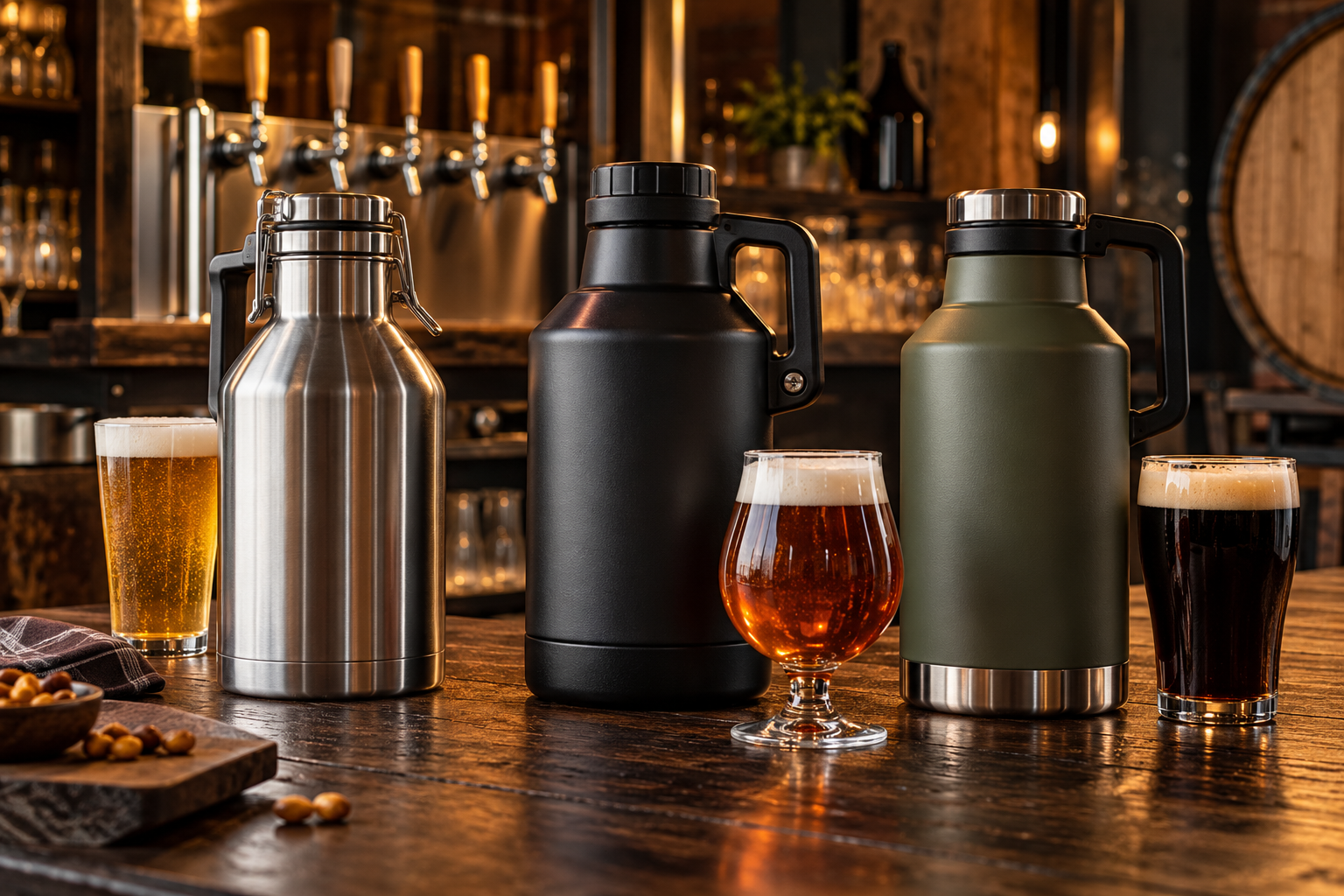
A growler should match the beverage, fill method, cleaning routine, closure, and time between tap and pour. Carbonation compatibility matters more than a rugged-looking bottle.
Confirm the container is meant for beer
A large insulated bottle is not automatically a growler. Carbonated beverages create pressure, and some bottle makers specifically prohibit carbonation with certain caps. Choose a container whose current instructions explicitly support beer or other carbonated drinks. Match the body and closure as one system; an accessory cap approved for water may be unsuitable for beer. If the manufacturer language is unclear, do not rely on marketplace titles or customer photos to establish pressure compatibility.
Start with the fill rules
Breweries and taprooms may limit which containers they fill, require a clean vessel, or use specific fill equipment. Check local rules before buying. A wide mouth can simplify cleaning and filling, but the opening must work with the taproom process and closure. Ask how much headspace the filler expects and when the beer should be consumed. A growler preserves a short trip from tap to home; it does not turn draft beer into a shelf-stable packaged product.
Compare current reference designs
Stanley currently lists a 64-ounce Classic Easy-Pour Growler with a steel-lined insulated lid, handle, wide mouth, and dishwasher-safe construction. Hydro Flask also documents a 64-ounce growler format. Treat those exact names and capacities as part of the product identity. Similar bottles in the same brand may use different caps and warnings. Match the model, capacity, and closure to its official care guidance.
Judge the closure and seal
A good closure should seat predictably, remain easy to inspect, and use replaceable seals when the manufacturer supports them. Flip tops provide clear mechanical closure but add hinges and gaskets to clean. Threaded lids are simple but can trap residue. Never force a swollen, stuck, or damaged closure. Open a carbonated container upright, away from faces, and in a controlled place. If the vessel leaks, deforms, or releases pressure unexpectedly, stop using it for beer.
Plan the cleaning routine
Beer residue, yeast, and biofilm can hide in lids, threads, handles, and gaskets. Rinse promptly after the pour, then follow the maker’s cleaning instructions. Dishwasher-safe claims may apply to the body but not every seal or finish, so separate components only as directed. Avoid abrasive tools that scratch interior surfaces. Let all pieces dry completely before reassembly. Persistent odor, visible residue, damaged coatings, or a seal that cannot be cleaned are reasons to replace the affected component.
Consider carry and pouring
A filled 64-ounce growler is heavy. Check handle shape, grip clearance, balance, and whether the lid can strike the nose or glass while pouring. A wide body may not fit vehicle cup holders, so transport it upright in a stable carrier. Keep it shaded and cold according to brewery guidance. At home, pour into clean glassware rather than drinking from the growler. Controlled pouring protects the aroma and foam while reducing repeated warming and contamination of the container.
Use insulation realistically
Vacuum insulation slows temperature change; it does not reset warm beer or prevent quality loss after opening. Pre-chill only if the manufacturer permits the method, and never freeze a sealed carbonated growler. Keep the fill cold from tap to refrigerator and consume it within the brewer’s recommended window. Do not quote a universal number of fresh hours because filling method, beer style, closure, temperature, and opening history all affect the result. The brewery’s advice should lead.
Choose the system you can maintain
Select the Stanley when its handled easy-pour design and approved beer use fit your routine; compare Hydro Flask’s growler when you want a different body and closure; consider a pressure-rated system only when you understand its regulator, seals, and cleaning. The cap, capacity, model, and carbonation instructions are essential parts of choosing a growler that fits your routine.
Quick checklist
- Verify explicit carbonated-beverage compatibility.
- Check the brewery’s fill policy.
- Match body, lid, and exact model.
- Inspect seals and pressure behavior.
- Choose a design you can clean fully.
- Keep the fill cold and follow local guidance.
Why these checkpoints matter
- Verify explicit carbonated-beverage compatibility. This defines the starting condition and prevents the rest of the process from resting on an assumption.
- Check the brewery’s fill policy. This narrows the choice to evidence you can verify on the exact label, model, or scene.
- Match body, lid, and exact model. This checkpoint reduces avoidable risk before another variable is introduced.
- Inspect seals and pressure behavior. This keeps the routine compatible with the person, product, material, or equipment involved.
- Choose a design you can clean fully. This creates a repeatable step instead of relying on memory or marketing language.
- Keep the fill cold and follow local guidance. This final review catches changes in condition, availability, or instructions before the next use.
Common questions
Can I use any 64-ounce insulated bottle?
No. Some caps prohibit carbonated drinks. Use a vessel whose manufacturer explicitly supports beer or carbonation.
How long does growler beer stay fresh?
There is no universal window. Follow the brewery’s guidance and account for fill method, temperature, closure, style, and whether it has been opened.
Should I freeze the growler first?
Do not freeze a sealed carbonated container. Follow the manufacturer’s pre-chilling instructions, if any.
Official product references
- Stanley Classic Easy-Pour Growler 64 oz
- Hydro Flask 64 oz Growler product document
Recommended insulated growlers
Stanley Classic Easy-Pour Growler 64 oz
A handled, insulated growler for carrying beer to share; match the closure and care routine to the exact model.
Stanley Classic Easy-Pour Growler 64 oz
A handled growler for taking a generous fill of beer to share with friends.
Find in Amazon (paid link)
Hydro Flask 64 oz Beer Growler
A 64-ounce growler format with a different body and closure to compare against your carrying and fridge space.
Hydro Flask 64 oz Beer Growler
A larger carry-along option when you’re bringing a growler of beer to share.
Find in Amazon (paid link)
stainless steel pressure-rated beer growlers
stainless steel pressure-rated beer growlers
A pressure-rated serving format needs an appropriate regulator, seals and cleaning routine; follow the instructions for the exact system.
Find in Amazon (paid link)