Reviewed and updated: November 10, 2026
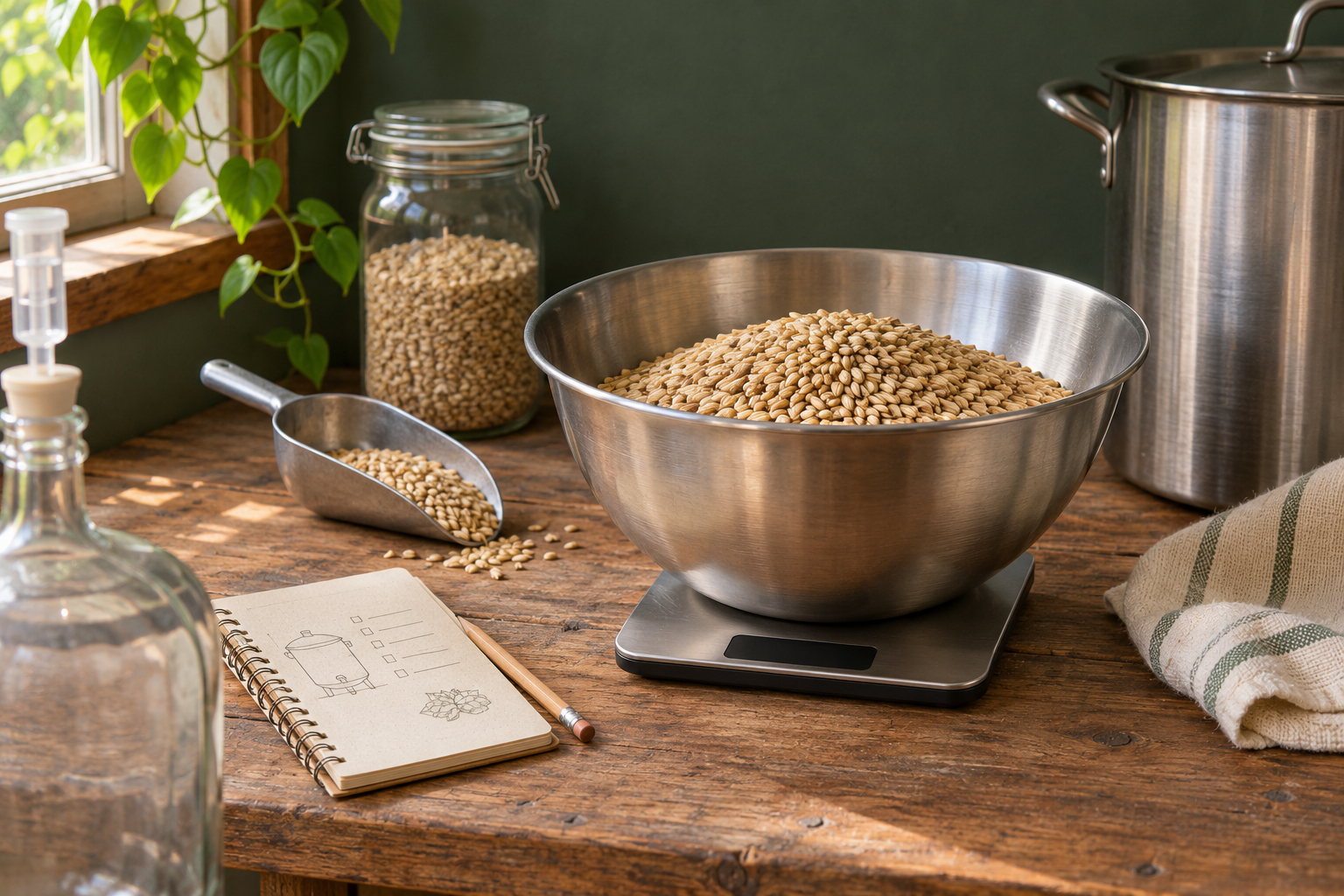
If your mixing bowl keeps hiding the scale’s screen on brew day, the OXO Good Grips 11 lb Food Scale is worth a look. Its pull-out display is the reason we’d consider it for weighing malt, extract, and larger recipe additions. You can keep the bowl in a sensible place and bring the reading out where you can see it.
It won’t cover every weighing job in a home brewery. The bowl counts toward the eleven-pound limit, and the metric display moves in whole grams. That makes this more appealing for everyday ingredient prep than tiny water-treatment additions or a big grain bill in one bucket. Give it the right job and the design has a clear benefit.
The best feature is the one you can actually see
Picture a wide bowl full of specialty malt sitting over a small scale. You lean down, move around, and still can’t quite see the number without nudging the bowl. OXO’s display pulls away from the base to reduce that obstruction and the shadows a large container can cast.
It’s a simple idea, and that’s its appeal. You don’t need a long list of brewing features when the annoyance you’re trying to fix is a hidden screen. If you use the same scale for kitchen jobs between batches, a readable layout can earn its place there as well.
Leave some room in front of the scale for the display to extend. Keep the bowl centered and supported by the platform, without touching the wall or another container. The movable screen helps you see the reading; the bowl still needs to sit properly while you weigh.
OXO Good Grips 11 lb Stainless Steel Food Scale with Pull Out Display
A kitchen scale with a pull-out display that helps when a wide bowl hides the reading. Best suited to moderate ingredient loads, rather than fractional-gram additions. This button opens Amazon search results for the named OXO 11-pound scale.
View on Amazon (paid link)
Eleven pounds includes what holds the grain
The capacity is the total load on the platform, including your bowl or bucket. Pressing zero lets you read the ingredient weight more conveniently, but it doesn’t give the scale extra capacity. A lighter bowl leaves you more room for ingredients than a heavy one.
For smaller grain portions and extract additions, that may be plenty. If a recipe calls for twelve pounds of grain, though, you’re already beyond the limit before adding a container. You can weigh separate portions, but you’ll need to keep track of each one as you go.
We’d compare a higher-capacity scale if you regularly want the whole grain bill in one bucket. There’s no reason to build an extra counting job into every brew day just to use this model. The OXO is more convincing when its capacity fits your normal recipe prep comfortably.
Keep a finer scale for the tiny additions
OXO lists metric readings in one-gram increments. That’s a useful distinction when you move from measuring a bowl of grain to a very small mineral addition. A recipe calling for a fraction of a gram needs a scale intended for that smaller job.
For example, you can’t directly measure a 0.4-gram addition on a whole-gram display. Small hop or spice additions can raise the same question, depending on your recipe and batch size. We’d choose the measuring tool around the amount you actually need, rather than expecting one kitchen scale to do everything.
The size of the displayed steps also isn’t a promise of accuracy under every condition. If you need a particular level of precision, check the exact instrument’s specifications. For this purchase, the straightforward question is whether the amounts you usually weigh fit comfortably within its intended range.
Make the zero button work for your brew day
The zero function lets you take the container out of the displayed reading and add ingredients in sequence. That can make preparation tidier, especially when you’ve got several additions ready to go. Keep the recipe nearby so you can see both the target and what you’ve already measured.
If you tend to get interrupted, separate labeled containers can be easier than adding everything to one bowl. You can weigh, record, and set each portion aside. If you prefer building the total in one container, remember the load limit and keep a note at each stage.
A few clear batch notes help when a beer turns out especially well and you want to brew it again. The scale gives you an amount at that moment; writing it down saves you from guessing which adjustment you made when you’re planning the next batch.
A useful kitchen tool, with a brewing job
We like the idea of equipment that works for beer and earns its space in the kitchen the rest of the week. This scale’s strongest role is a dry ingredient-prep spot where you can set down a manageable bowl and read it easily. You don’t need to turn it into a dedicated brewing station to make it useful.
A hot kettle or full fermenter is a different matter. Think about the load, footprint, heat, and spills before setting brewing equipment on a countertop food scale. We’d keep this one away from the hot, wet side of the job and use equipment suited to heavier vessels when that’s what you need.
It also measures ingredient weight, rather than fermentation progress. If your next purchase is really about checking the beer’s gravity, a hydrometer answers that question. Keeping those jobs separate helps you spend on the tool that will actually make your next batch easier.
Think about cleanup and cupboard space
OXO describes a platform cleaned by hand and a slim shape for storage. Follow the instructions with the scale rather than treating a stainless surface as permission to soak the whole thing. Malt dust and sticky extract are ordinary brew-day messes, but they still deserve a little care around a food scale.
Give it a dry, level spot, use a suitable bowl, and clean up once you’ve finished measuring. If your usual work area is constantly wet, compare equipment with an appropriate documented protection rating. The look of a metal platform doesn’t tell you how much water the complete scale can handle.
For storage, find somewhere the scale won’t end up under a heavy pot. Being able to put it away neatly is part of the appeal in a shared kitchen. You want it ready when the next recipe comes out, with the display easy to pull forward and room to work around the bowl.
Before settling on it, try your usual empty bowl in the space where you’ll weigh. That quick check tells you whether the pull-out screen solves your problem without crowding the rest of your ingredient prep.
Our take
We’d choose the OXO for moderate ingredient loads when a wide bowl regularly blocks the screen. That’s a useful, specific improvement. Keep a finer scale for fractional grams, and go larger if heavy grain bills are your normal brew day. If your current scale is already easy to read and suits your recipes, you may have the job covered.